


The Benefits of a Wired Network for UK Businesses
- Craig Marston
- Dec 29, 2025
- 15 min read

In an age where Wi-Fi seems to be everywhere, it’s easy to overlook the raw power of a physical cable. But for any serious business, a wired network is non-negotiable. It delivers superior speed, unwavering reliability, and robust security—three things a wireless connection just can't promise when the pressure is on. This physical connection is the bedrock of consistent, high-level performance.
Why Your Business Needs a Wired Network Backbone
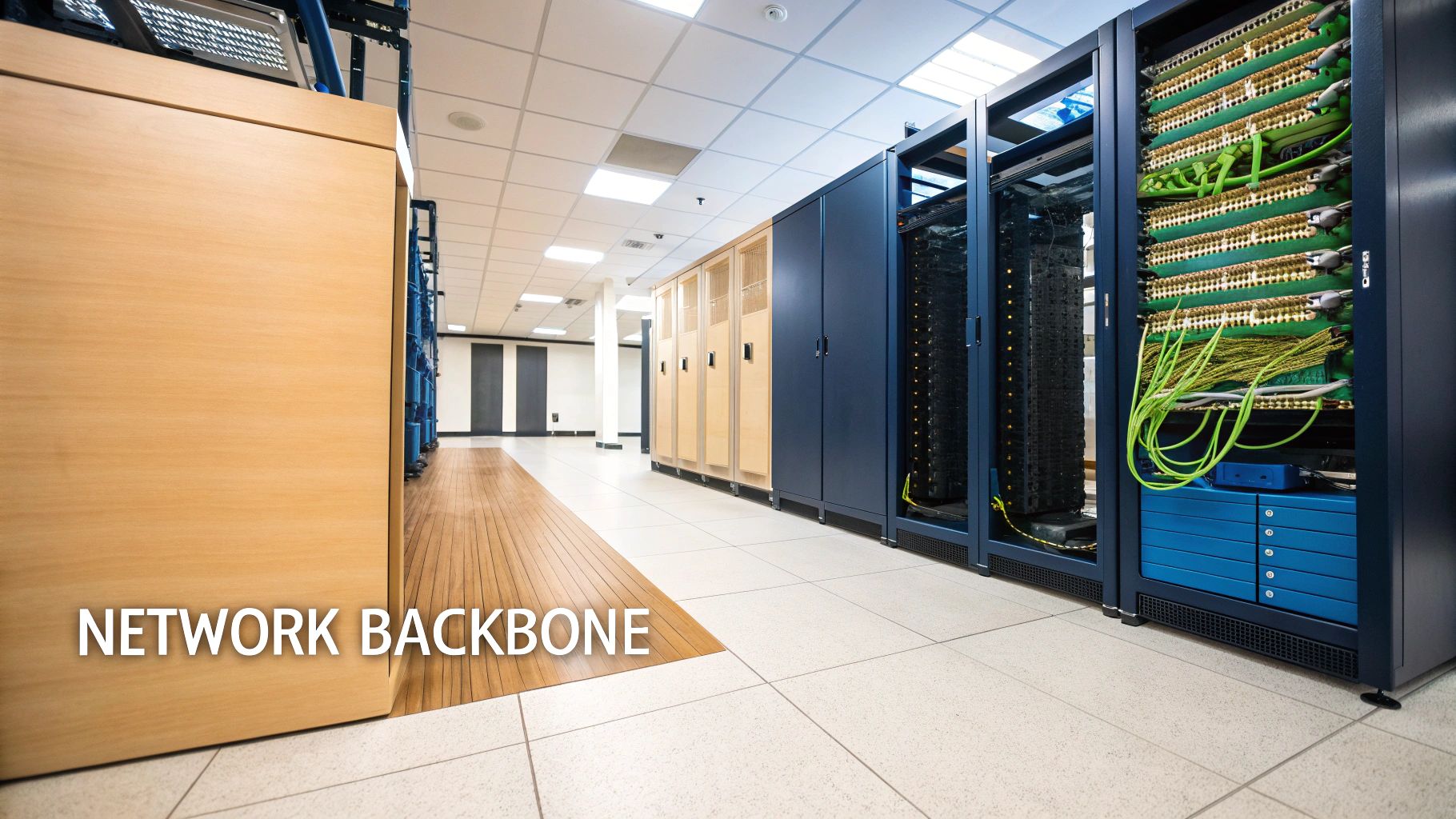
Think of your office's IT setup like a modern skyscraper. Wi-Fi gives you the freedom to arrange the furniture and move around—it’s the flexible interior design. But a professionally installed wired network? That’s the skyscraper’s steel foundation. It’s absolutely essential for stability, performance, and future growth.
This foundation is critical in demanding places like busy commercial buildings and hospitals. In these high-density environments, the airwaves get crowded. Countless devices, concrete walls, and even microwaves can cripple a wireless signal, leading to dropped calls, slow file transfers, and infuriating downtime. Getting the physical network wrong from the start can cause headaches for years.
The Strategic Value of Structured Cabling
This is where structured cabling, installed by certified professionals, changes the game. It’s like having a dedicated, private motorway for your data, completely bypassing the congested airwaves that plague Wi-Fi. To really grasp why this wired backbone is so indispensable, you have to see it in the bigger picture of a modern small business IT infrastructure. A well-planned installation means every desk, server, and critical piece of equipment has its own reliable, high-speed connection.
For any business that can’t afford to stop, a certified and tested wired network isn't an expense; it's a strategic asset. It protects your operations from the unpredictable nature of wireless, safeguarding productivity and keeping your data secure.
Built for UK Business Demands
The nationwide push for better connectivity across the UK really hammers home the importance of this physical infrastructure. By mid-2024, gigabit-capable broadband had reached 62% of UK premises—a massive leap from just 3% back in 2017. This surge, driven by full fibre cable, proves that a hardwired connection is the only way to truly tap into the speed and dependability that modern businesses need.
This robust physical layer is the heart of your entire operation. For a deeper dive, you can check out our guide on https://www.constructive-it.co.uk/post/what-is-network-infrastructure-a-guide-to-your-business-backbone. Ultimately, making sure your network is tested and certified gives you the peace of mind that your digital foundation is solid, secure, and ready for whatever you throw at it next.
The Unbeatable Trio of Speed, Reliability, and Security
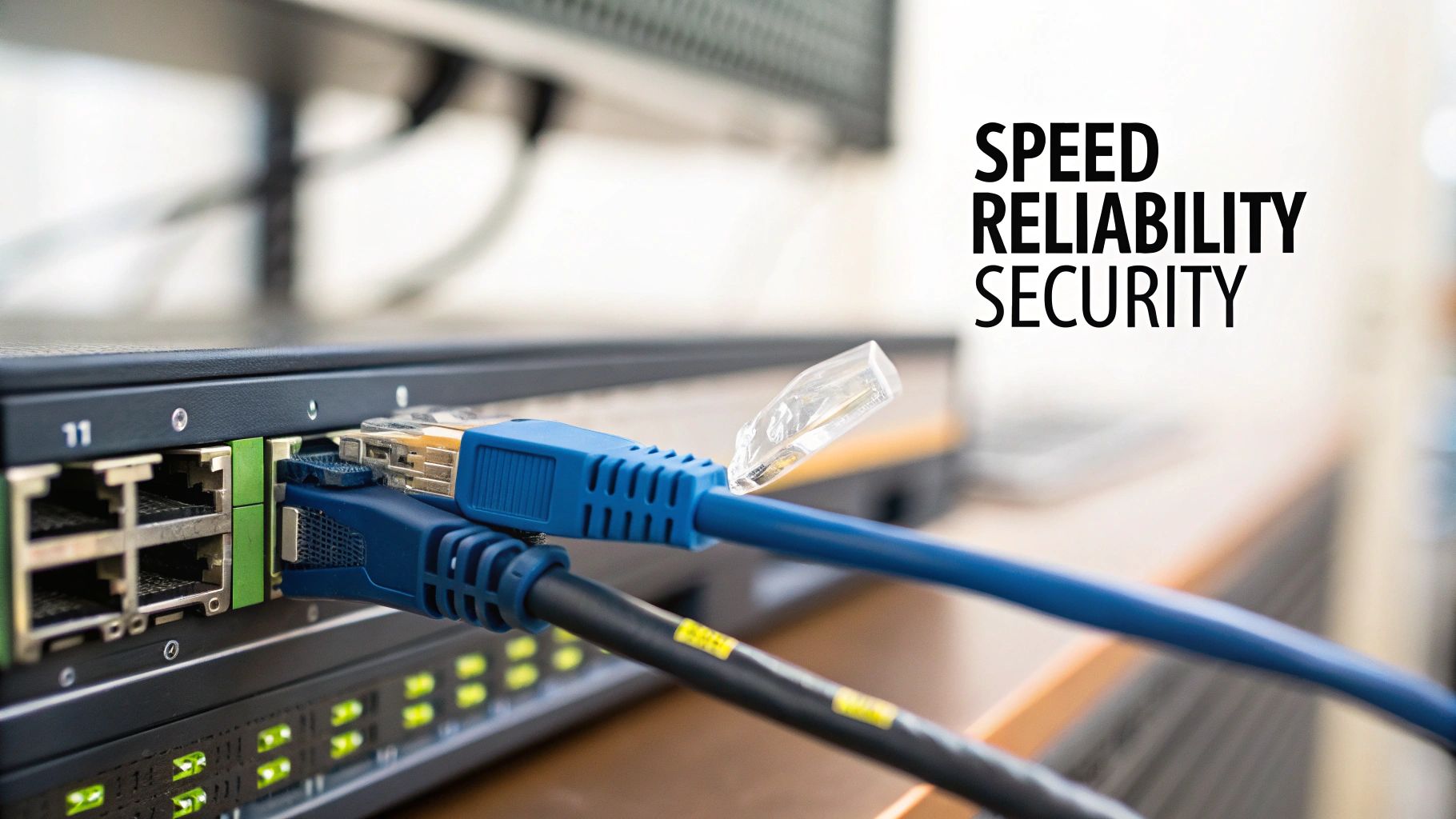
When you cut through all the IT jargon, what every business really needs from its network boils down to three simple promises: it must be fast, it must be reliable, and it must be secure. Wi-Fi certainly has its place with its grab-and-go convenience, but it operates on a "best effort" basis.
A professionally installed wired network, on the other hand, delivers on those three core promises with a consistency that wireless just can't match. It's the powerful engine your organisation needs to run without compromise. These aren't just technical perks; they're the pillars that support real-world productivity, protect your sensitive data, and keep the business running.
Unlocking Uninterrupted Speed and Performance
Network speed isn't just about how fast you can download a file. It's really a combination of two key things: bandwidth (the volume of data you can move) and latency (the delay before the data starts moving). Think of your network as a motorway. Bandwidth is how many lanes you have, and latency is the time you waste stuck at the toll booth before you can get going.
A wired connection using modern Cat6 or fibre optic cables is like having your own private, multi-lane superhighway with virtually no toll booths. This is why large file transfers complete in seconds, not minutes, and video calls are crystal-clear instead of glitching out with robotic voices. Wireless, in contrast, is more like a single-lane country road shared by everyone, prone to traffic jams and slowdowns.
This level of performance is essential in commercial buildings where dozens of people are hitting data-heavy applications all at once. The UK's rapidly expanding wired infrastructure reflects this demand. Recent statistics for 2025 show that 83% of UK premises can now get gigabit-capable networks, with 79% of SMEs able to connect at speeds of 1 Gbps or more. A wired network is the only way for a business to truly take advantage of these powerful connections. You can explore more data on UK business connectivity and see how it's boosting productivity.
The Guarantee of Unwavering Reliability
Reliability is arguably the most important benefit of a wired network, especially in places like hospitals where a dropped connection simply isn't an option. A physical cable is immune to all the common things that disrupt Wi-Fi signals—concrete walls, interference from other electronics, or even the wireless network from the office next door.
A wired setup gives you a stable, predictable connection you can count on, day in and day out.
No Signal Drops: Every device has its own dedicated physical link, which gets rid of the random disconnects that frustrate wireless users in a busy office.
Minimal Interference: Data travels securely inside insulated cables, shielded from the radio frequency interference that can cripple Wi-Fi performance.
Consistent Performance: Your network speed stays constant, regardless of how many new people join the network or where they are in the building.
A professionally installed and tested network delivery ensures every single connection point performs exactly as it should. This isn't a "hope for the best" situation; it's a verifiable guarantee of performance, backed by certification reports that confirm your infrastructure is free of data network mistakes.
Fortifying Your Defences with Enhanced Security
In an age of constant cyber threats, security has to be front and centre. A wired network provides a fundamental layer of physical security that wireless connections can't hope to match. To intercept data on a wired network, a criminal would need direct physical access to your cables or network ports—a far harder task than sniffing out wireless signals broadcast through the air.
This built-in security is vital for any organisation handling sensitive information, from financial institutions to healthcare providers like the NHS. By keeping your data contained within a physical cable, you dramatically shrink the attack surface available to outsiders.
Furthermore, when your network is installed by an accredited partner, every part of the setup is designed with security and compliance in mind. This includes proper cable management, which isn't just about a tidy desk and easier maintenance, but also about preventing unauthorised tampering. A certified and tested network is your first and strongest line of defence, making it significantly harder for unauthorised users to get a foothold in your systems.
Future-Proofing Your Business with Professional Cabling
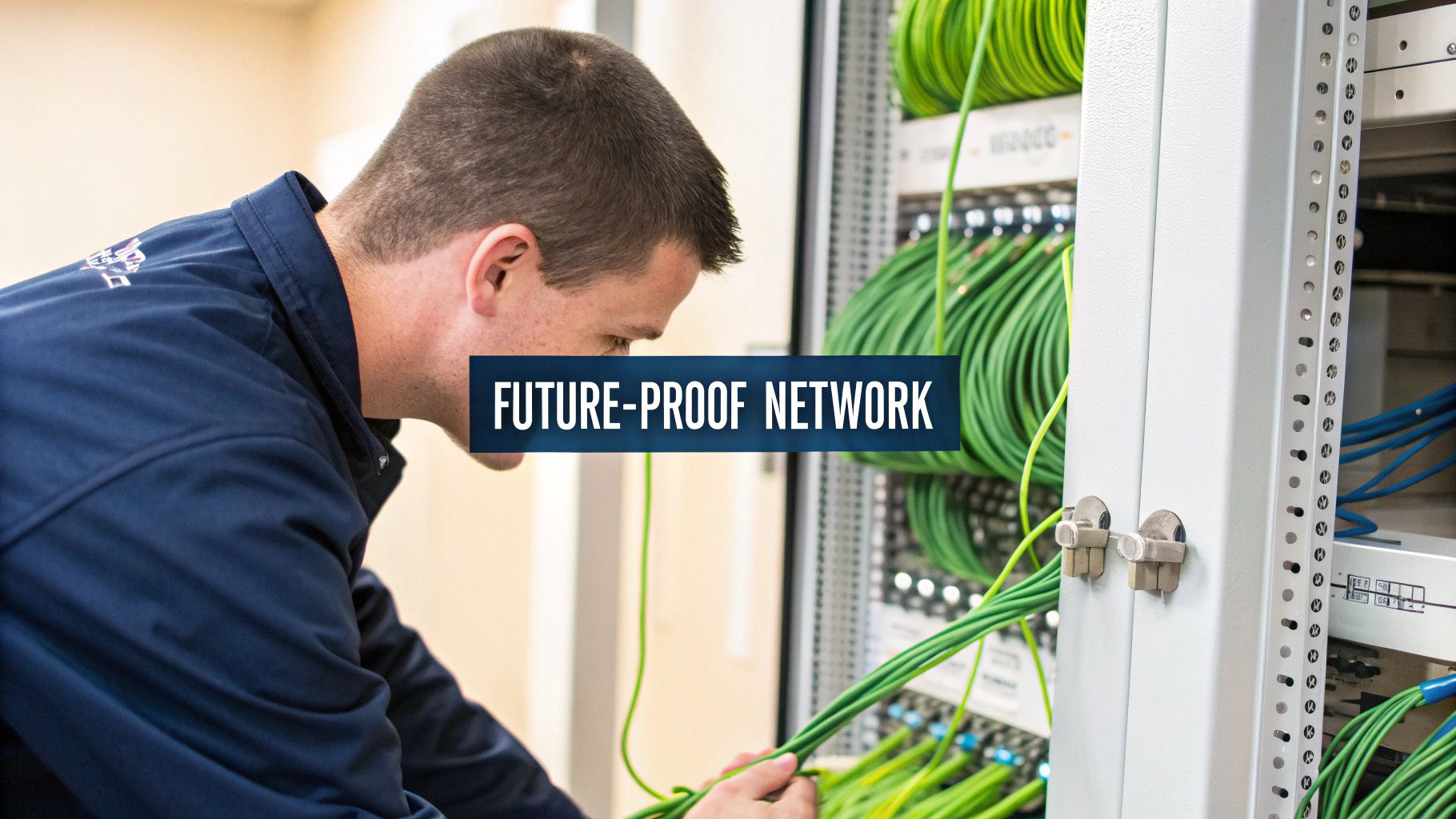
While the immediate boost in speed and reliability is a huge win, the real strategic value of a professional wired network is its longevity. Investing in a high-performance structured cabling system is one of the smartest moves a business can make. It's not just about meeting today's demands; it's about building an infrastructure that’s ready for the technologies of tomorrow.
Think of it as the foundations for a building you plan to expand. A network thrown together in a hurry might work for now, but it will crack under the pressure of future growth. A professionally installed system using standards like Cat6, or even better, fibre optic cable, creates a digital backbone ready for years of service.
This forward-thinking approach is especially important for IT managers focused on the total cost of ownership (TCO). A well-designed network can easily handle an influx of new devices—from IoT sensors in a smart building to advanced AV systems in a boardroom—without needing a disruptive and expensive overhaul every few years.
The Value of Certified Installation and Warranties
Choosing the right partner for your installation is just as critical as choosing the right cable. When you work with an accredited installer, such as an Excel network accredited partner, you're not just getting cables run; you're getting a fully certified and tested network.
This certification process is your guarantee of performance. Using specialised equipment, every single cable run and termination point is meticulously tested to ensure it meets strict industry standards. This simple step eliminates the common data network mistakes that lead to intermittent faults and frustrating connectivity issues down the line.
The ultimate peace of mind comes from the warranty. An accredited installation often includes a comprehensive 25 year equipment warranty. This isn't just a promise; it's a long-term assurance that your network's physical components are protected, safeguarding your initial investment for decades.
This level of assurance is particularly crucial for specialised environments like hospitals, where network failure is not an option, or during complex projects like an office relocation with equipment testing, where everything must work perfectly from day one.
Designed for Growth and Simplified Maintenance
A future-proof network is also a practical one. One of the most overlooked benefits of a professional installation is meticulous cable management. This goes far beyond just keeping things looking neat; it’s about creating an organised, efficient, and easily maintainable system.
A tidy server cabinet isn't just for show. It lets technicians troubleshoot issues faster, perform upgrades with minimal disruption, and reduces the risk of accidental disconnections. This same principle extends to the user’s workspace, contributing to a tidy desk environment free from a chaotic mess of wires.
Scalability: A structured cabling system is designed for easy expansion. Adding new data points for extra staff or new equipment becomes a simple, low-cost task rather than a major project.
Adaptability: With high-performance cabling in place, your business is ready for next-generation technologies. Whether it’s 10-Gigabit Ethernet, advanced VoIP systems, or high-definition CCTV, your network won’t be the bottleneck. To see how modern cabling supports these speeds, have a look at your essential guide to Category 6a cable for UK networks.
Reduced Downtime: When maintenance is needed, organised cabling makes identifying and resolving problems straightforward. This systematic approach dramatically cuts potential downtime, protecting productivity.
Ultimately, investing in a professionally installed, certified, and warrantied wired network is the most effective way to ensure your business's digital infrastructure is a resilient asset, not a recurring liability. It’s a foundational decision that pays dividends through performance, reliability, and the capacity to grow without limits.
Common Network Installation Mistakes to Avoid
Putting a high-performance wired network into your business is a fantastic move, but you only see the benefits if the installation is done right. Sadly, a lot of businesses, especially when they're under the pressure of an office move, make the same old mistakes that cripple their new infrastructure from the word go. These missteps can lead to years of frustratingly slow performance and bills you never saw coming.
Dodging these pitfalls isn't just about technical skill; it's about thinking ahead and demanding quality. From picking the wrong cable to skipping the final checks, every shortcut creates a weak link in your network chain. Understanding these common blunders is the first step to making sure your network runs like a dream from the day it goes live.
Mistake 1 Skimping on Cabling Standards
One of the most frequent and damaging mistakes is opting for cheap, uncertified cabling to shave a bit off the upfront cost. A facilities manager might see two boxes of cable that look similar but have a big price difference and naturally go for the cheaper one. This is a classic false economy that almost always comes back to bite you.
This becomes a massive problem in places like hospitals. Imagine a new wing is opened, but critical diagnostic equipment keeps dropping its connection. The culprit is often traced back to shoddy cabling that just can't handle the data load, leading to packet loss and unreliable performance.
The solution is simple: insist on high-quality cabling from trusted manufacturers. Working with an Excel network accredited partner, for example, guarantees that the materials meet strict performance standards, giving you a rock-solid foundation for your entire network.
Mistake 2 Overlooking Professional Testing and Certification
Another costly error is just assuming a network is working because a laptop can get online. An installation might look finished, but without professional verification, hidden faults can be lurking just under the surface, ready to cause chaos when your network is at its busiest.
A network that isn't professionally tested and certified is an unknown quantity. It’s like building a new office but never getting the electrical systems inspected—you are taking an unnecessary risk with a business-critical asset.
A certified and tested network delivery should be non-negotiable. Using advanced diagnostic tools, engineers test every single connection point for things like signal loss, crosstalk, and whether it meets performance standards. This process gives you a detailed report, offering hard proof that your infrastructure is built to spec and will perform under pressure. This certification is also usually a requirement for a 25 year equipment warranty, securing your investment for the long haul.
Mistake 3 Poor Planning and Cable Management
Finally, a lack of planning often leads to a network that's a messy, unmanageable nightmare and completely unprepared for the future. This shows up as not having enough data points, forcing people to use clumsy extension cables, or a server room so chaotic that tracing a single cable becomes a major headache.
This poor foresight spills out into the workspace, resulting in a tangle of wires that ruins the goal of a clean, tidy desk environment. Proper cable management isn't just about looking good; it's a vital part of a functional and easy-to-maintain network. A well-planned installation, especially for large commercial buildings and hospitals, considers both current needs and future growth, making sure that adding or moving equipment is a straightforward job.
The move to wired connectivity is happening fast; in the UK, full fibre connections hit 11.56 million in Q3 2025, finally overtaking older copper lines. This trend just highlights why getting the installation right from the start is so crucial for future-proofing your business. Discover more insights from the Q3 2025 UK market overview.
Integrating Cabling into Office Relocations and Fit-Outs
An office move or a new building fit-out isn't just a logistical challenge—it's a golden opportunity. This is the perfect moment to build a network infrastructure that doesn't just work, but excels from day one. Integrating your structured cabling plan into the very early stages is the single best way to avoid the costly downtime and frustrating compromises that always happen when it's treated as an afterthought.
By thinking about the network from the start, you weave it into the very fabric of the building project. It means the design can be perfectly aligned with the building's layout, power systems, and exactly how your organisation needs to operate. When it's done right, your team can walk into the new space, plug in their kit, and be fully operational from the moment the doors open.
The Blueprint for a Seamless Transition
Success here hinges on a methodical, professional process. A rushed, haphazard approach will inevitably lead to overlooked details and problems that will haunt you for years. A certified network delivery model, on the other hand, follows a proven blueprint designed to guarantee performance and reliability—especially in high-stakes environments like commercial buildings or hospitals.
Just think about the relocation of an NHS facility. Here, network connectivity isn’t a matter of convenience; it’s a lifeline. Critical diagnostic machines, patient monitoring systems, and communication tools all depend on a connection that absolutely cannot fail. A network outage isn't just an inconvenience; it can directly impact patient care. This kind of scenario really drives home why a meticulous, multi-stage process is completely non-negotiable.
The project should always kick off with a comprehensive site survey. This first step involves mapping out the physical space, identifying potential roadblocks, and working alongside architects and electrical engineers to plan the best possible routes for cables and locations for server rooms. This early collaboration prevents so many common data network mistakes, like putting data points in useless locations or completely forgetting to plan for future expansion.
Key Milestones in a Professional Installation
Once the initial design is locked down, the project moves through several critical stages, each building on the last to ensure a flawless outcome. Here’s a look at the key phases you should expect from a professional partner.
To give you a clearer picture, here’s a quick checklist of the key milestones in a professional network installation project. This table breaks down what happens at each stage and why it’s so important for getting the final result right.
Project Milestone Checklist for Network Installation
Project Phase | Key Activities | Primary Benefit |
|---|---|---|
Initial Survey & Design | Conduct a full site survey, collaborate with architects, and plan cable routes and comms room placement. | Prevents costly mistakes, ensures the network is optimised for the space, and plans for future growth. |
Professional Implementation | Certified engineers install Cat6 and fibre optic cabling according to strict industry standards with meticulous cable management. | Guarantees the physical infrastructure is robust, easy to maintain, and meets all performance specifications. |
Pre-Move Equipment Testing | Test key network hardware (switches, servers) before the final move-in day. | Identifies and resolves any hardware or compatibility issues early, preventing major disruption during the transition. |
Full System Testing & Certification | Rigorously test every single data point using specialised equipment to verify performance and certify the installation. | Provides documented proof that the network performs as specified and is the final step to unlock the manufacturer's warranty. |
Each of these steps is essential for building a network that is not only fast and reliable on day one but remains a solid asset for years to come.
Here's a closer look at what goes into those later stages:
Professional Implementation: This is where the plan becomes a reality. Certified engineers, such as an Excel network accredited partner, will carry out the fibre cable installation and Cat6 cabling according to strict industry standards. Meticulous cable management is applied from the very beginning, ensuring the final system is organised, easy to maintain, and helps create that tidy desk environment for your staff.
Pre-Move Equipment Testing: Before the big move, all key network hardware and equipment should be tested. This proactive step catches any compatibility issues or hardware faults before they can cause chaos in the new office, ensuring a much smoother go-live on moving day.
Comprehensive Testing and Certification: This is the final and most crucial step. Once everything is installed, every single data point is rigorously tested with specialised equipment to verify its performance. Making sure your network is tested and certified is the only way to get documented proof that the infrastructure meets the required performance specifications.
This final certification report is your guarantee. It confirms that your network is free from physical faults and is ready to perform under pressure. It's also the key that unlocks a long-term 25 year equipment warranty, securing your investment for decades.
Before you embark on such a major project, consulting an ultimate office relocation checklist that covers IT requirements is vital for a smooth transition. Proper planning really is the difference between a chaotic move and a successful one.
For a more detailed walkthrough on navigating the complexities of a move, you can read the ultimate guide to office relocation for more practical insights. By integrating professional network planning into your relocation from day one, you ensure your new workspace is built on a foundation of solid, reliable connectivity.
Building Your Business on a Foundation of Connectivity
The core benefits of a wired network—unmatched speed, unwavering reliability, and robust security—aren't just technical talking points. They are the essential building blocks for a resilient and future-proof digital infrastructure for any modern organisation, from commercial offices to hospitals.
But having the best technology in theory means nothing without a flawless installation. Choosing a professional install is what turns those benefits into a practical reality. This is where working with an expert partner, like an Excel network accredited partner, makes all the difference.
They ensure every detail, from the initial fibre cable installation to the final certification, is handled correctly, sidestepping common data network mistakes. This professional approach guarantees a tidy desk environment through expert cable management and, crucially, secures your investment with a long-term 25-year equipment warranty.
The process isn't just about plugging things in. It's a structured workflow designed to deliver peak performance.
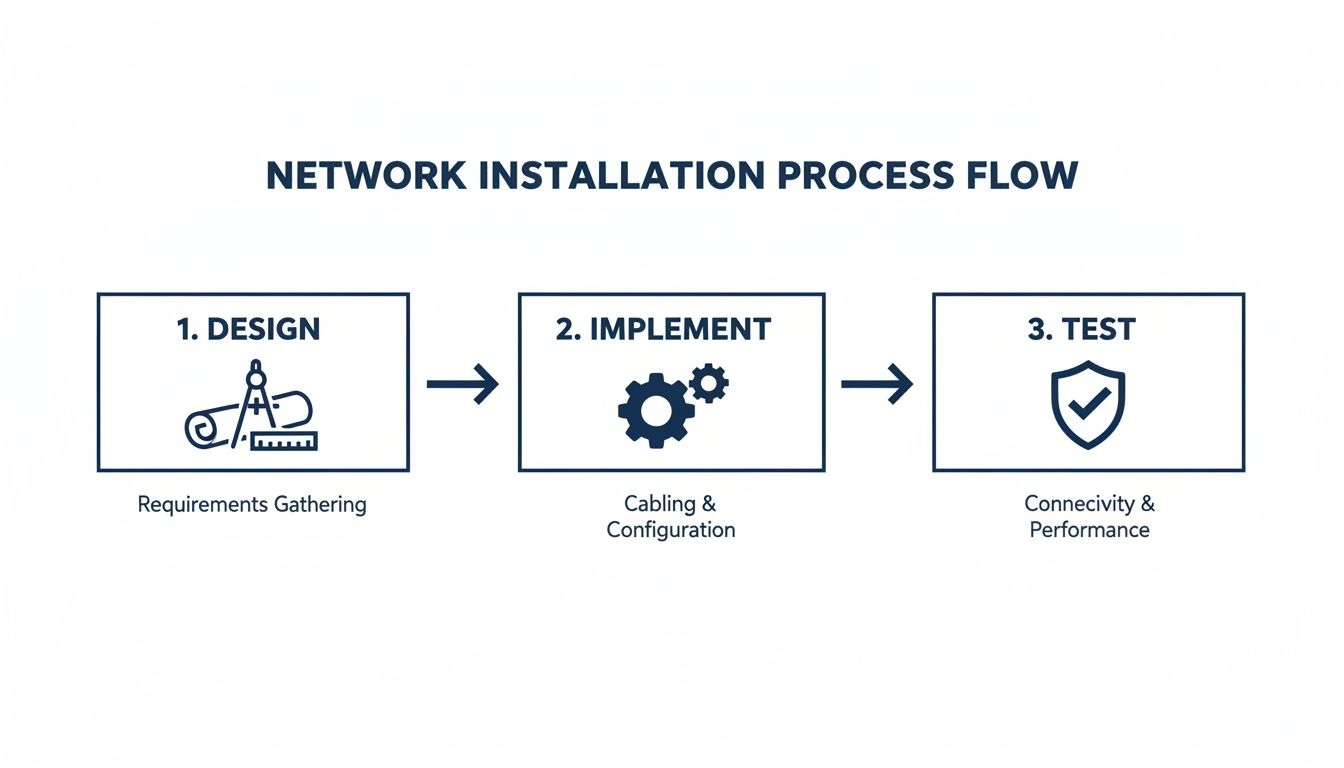
This methodical approach confirms that every single data point meets exacting standards. That's vital during an office relocation or a new fit-out where day-one readiness is paramount. Ultimately, making sure your network is tested and certified is the final, non-negotiable step. It provides the documented proof that your business is built not just for today, but for decades of growth to come.
Your Questions, Answered
When it comes to a network installation or a major upgrade, IT and facilities managers always have a few crucial questions. Let's get straight to the most common ones we hear about the real-world value of a wired network in today's offices.
Is a Wired Network Still Necessary with Modern Wi-Fi?
Absolutely. While Wi-Fi is fantastic for giving people the freedom to move around, it simply can’t compete with the raw, consistent performance of a wired connection, especially in a busy commercial space like an office or hospital. A wired network is your private, interference-free motorway for data, which is essential for mission-critical operations, hefty file transfers, and crystal-clear video calls.
The smart money is on a hybrid strategy. Use a powerful wired network as the high-speed backbone for all your fixed devices—desktops, servers, printers—and then layer Wi-Fi on top for convenient access where mobility is genuinely needed.
What Does a Certified and Tested Network Actually Mean?
Think of certification and testing as the final quality inspection that proves your new network installation meets strict, internationally recognised performance standards. Our engineers use specialised equipment to test every single cable and connection, hunting for hidden issues like signal loss or tiny wiring faults that could cause major headaches down the line.
A certified and tested network delivery comes with a detailed report that acts as your guarantee—proof that every single data point is performing exactly as it should. This professional sign-off eliminates all guesswork. It's also why, as an Excel network accredited partner, we can offer a rock-solid 25 year equipment warranty on our installations, giving you incredible long-term value and complete peace of mind. For any business-critical infrastructure, getting it properly tested and certified is non-negotiable.
When Should We Start Planning the Network for an Office Relocation?
As early as humanly possible. Ideally, you should start planning your network infrastructure during the initial architectural and electrical design stages of your office relocation. Getting a network specialist involved from day one allows for a strategic layout that integrates perfectly with the building's floor plan.
This kind of foresight ensures data points and comms rooms are placed in the most logical spots, which helps you avoid expensive, last-minute changes and the common data network mistakes that always crop up from rushed planning. It guarantees your new office is fully connected with minimal downtime from the get-go, whether it's a standard office block or a complex hospital fit-out. Good planning also bakes in meticulous cable management from the start, helping to maintain that clean, tidy desk environment for everyone.
At Constructive-IT, our expertise is in planning and delivering certified, high-performance network infrastructures for businesses across the UK. If you're planning an office move or a network upgrade, let's work together to build a foundation that will support your organisation for years to come. Get in touch with our experts today.
Comments