


A Complete Guide to UK Socket Floor Boxes for Commercial Buildings
- Craig Marston
- Dec 31, 2025
- 16 min read

Socket floor boxes are clever, integrated connection points installed right into the floor. Think of them as discreet hubs for both power and data, designed to get rid of trailing wires and the trip hazards that come with them. The goal? A safer, tidier, and far more flexible workspace, whether it's a busy commercial building or a critical environment like a hospital.
The Foundation of a Modern Commercial Workspace
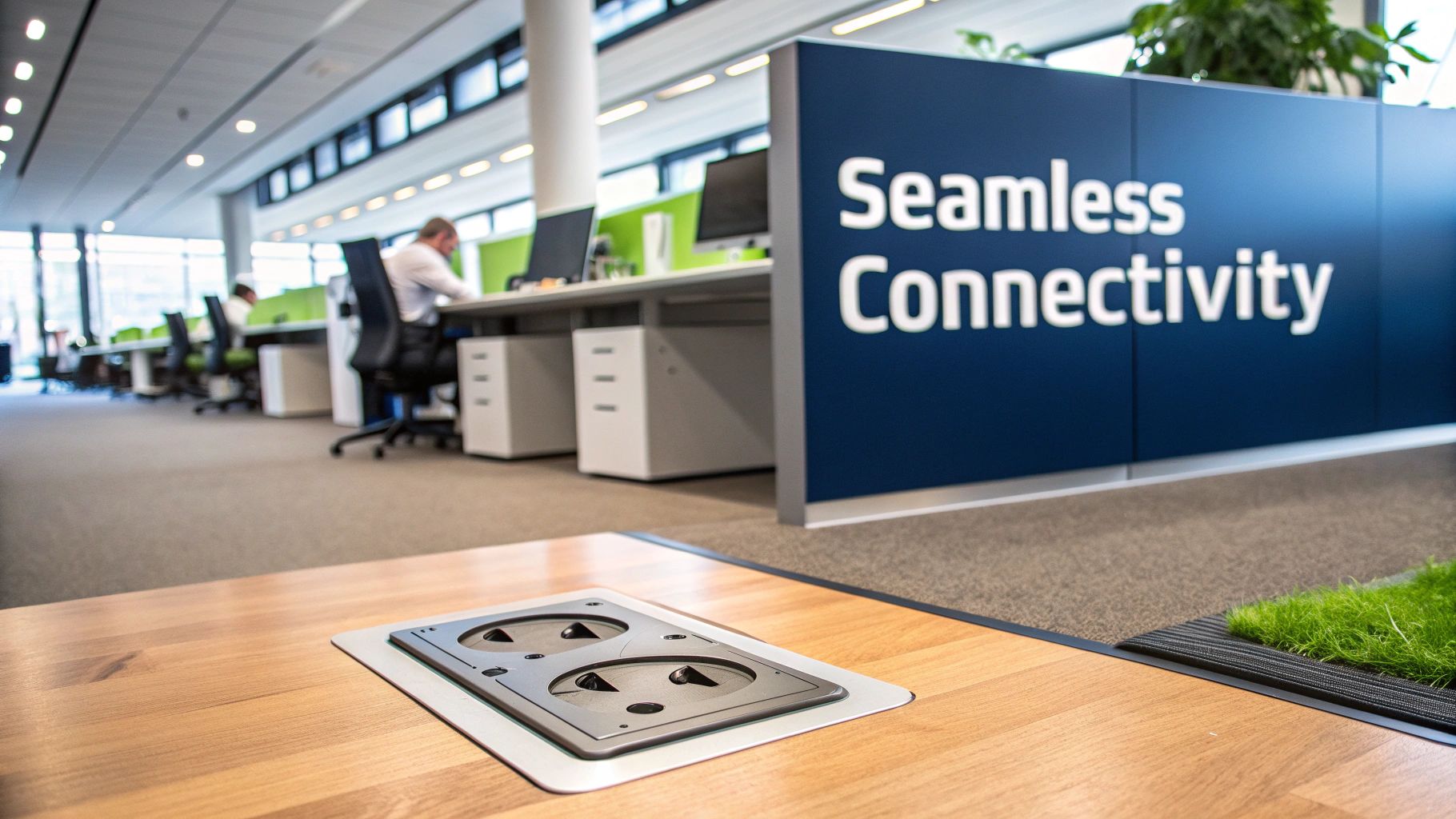
In any professional setting—from a corporate headquarters to an NHS hospital—the layout is never set in stone. Teams grow, departments get reshuffled, and new tech comes along. A traditional, wall-based setup makes these changes a nightmare, often leaving a messy web of extension leads and network cables snaking across the floor. This isn't just a serious trip hazard; it's a common cause of preventable data network mistakes.
Socket floor boxes solve this problem elegantly by putting connectivity exactly where it's needed: right at the point of use. By installing these units under desks, in meeting rooms, or in collaborative spaces, you create a workspace that's built to adapt and naturally supports a tidy desk policy through superior cable management.
More Than Just a Power Point
It’s easy to mistake these units for glorified plug sockets, but that's missing the point. Modern floor boxes are sophisticated hubs for your entire digital operation, offering a neat combination of power and high-speed data connections. This integrated approach is absolutely vital for keeping your network performance at its peak and future-proofing the building's infrastructure.
For any commercial building or hospital, the benefits are clear:
Enhanced Safety: By keeping cables tucked away in the floor void and providing direct access points, they dramatically cut down the risk of trips and falls—a huge concern in any workplace.
Ultimate Flexibility: As your organisation evolves, floor boxes let you reconfigure the office layout without needing a major rewiring job. This is a game-changer during an office relocation with equipment testing.
Professional Aesthetics: A clean floor and a tidy desk don't just look good. They contribute to a more organised, productive atmosphere and project a professional image to staff and clients alike.
Superior Cable Management: They are the endpoint of a properly structured cabling system, making sure every connection is managed, secure, and easy to look after.
A well-planned floor box installation is the difference between a reactive, chaotic network and a proactive, strategic one. It lays the groundwork for a reliable, high-performance environment that can support your business for decades.
This growing demand for cleaner, more adaptable commercial spaces is plain to see in the market. The UK's plugs and sockets sector, which includes these floor boxes, hit a value of £23.1 billion in 2024. That's a 3.2% increase, marking the sixth year of consecutive growth. It just goes to show how essential these components have become in modern office fit-outs. You can read more about the floor socket box market growth on ResearchAndMarkets.com.
Ultimately, getting this right comes down to choosing a professional installer for your network infrastructure. As an Excel network accredited partner, we deliver certified, tested network delivery for both fibre cable installation and copper. This ensures every single connection point meets exacting standards and, crucially, is backed by a 25 year equipment warranty, protecting your investment for the long haul.
Choosing the Right Socket Floor Box for Your Space
Picking the correct socket floor box is about far more than just looks; it’s a strategic move that directly affects how functional, safe, and adaptable your entire commercial space will be. Get it right, and you get seamless connectivity. Get it wrong, and you’re signing up for frustrating limitations and future headaches.
Think of it like choosing a vehicle: a sports car is brilliant for a track day, but you wouldn't use it to haul materials around a building site. Similarly, the floor box you install must be a perfect match for its environment. A bustling open-plan office has completely different needs to a sterile hospital ward. The goal is to match the hardware to the specific demands of the space—footfall, durability, and the exact connections needed—to ensure you get a solution that works flawlessly for years.
When you start looking at the options, you'll find they generally fall into three main categories, each designed for specific jobs in commercial buildings and hospitals.
Understanding the Main Types of Floor Boxes
The first step is getting to grips with the primary designs out there. Each type has its own distinct advantages and is built to solve a particular set of challenges, whether it's in an office, a healthcare setting, or a classroom.
Flush-Mounted Boxes: These are the unsung heroes of high-traffic areas. They're designed to sit perfectly level with the floor, and their lids are often recessed to hold a piece of the surrounding floor covering, like a carpet tile or vinyl. This makes them almost invisible, minimising trip hazards and keeping corridors, reception areas, and open-plan zones looking clean and professional.
Pop-Up Units: These are ideal for spaces where you need connectivity on demand, like meeting rooms, boardrooms, or collaboration pods. The unit stays hidden and flush with the floor until someone presses a button, causing the socket module to "pop up" for easy access. When it’s no longer needed, it retracts back into the floor, protecting the sockets from dirt and spills while keeping the surface clear.
Modular Boxes: This is where you get real customisation. Modular floor boxes are designed with flexible plates and compartments that you can configure with a specific mix of power, data, and audio-visual ports. This versatility is a must-have for modern workspaces where connectivity needs are diverse and likely to change over time.
For example, a creative agency might need a modular box with both standard UK power and multiple Cat6a data ports to handle huge file transfers. A university lecture hall, on the other hand, might require a mix of power, data, and HDMI connections for presentations. The modular design makes this possible without having to install a cluster of separate units.
The real power of a modular system is its ability to adapt. You can specify a configuration that includes fibre cable installation alongside traditional copper data ports, creating a future-ready connection point that can handle the bandwidth demands of tomorrow.
Matching the Box to Your Building's Needs
A one-size-fits-all approach just doesn't work with floor boxes. A hospital, for instance, has incredibly strict hygiene and safety rules. In clinical areas, you’d almost certainly choose a sealed, flush-mounted unit with a tough, water-resistant lid to stop liquids from getting in and to make cleaning easy.
Contrast that with a dynamic hot-desking office. Here, flexibility is everything. Modular pop-up units, placed strategically around the floor, would let teams reconfigure their workspaces on the fly, providing power and certified network access exactly where it's needed for the day. When selecting and planning the integration of these boxes, it’s also vital to get your head around the relevant building codes. For a deep dive on this, a great resource is this guide on navigating building codes and regulations.
To help you visualise the options, we’ve put together a quick comparison.
Comparison of Socket Floor Box Types
This table breaks down the key differences between the main floor box types, helping you decide which is the best fit for your commercial environment.
Box Type | Best For | Key Advantages | Considerations |
|---|---|---|---|
Flush-Mounted | High-traffic zones, corridors, open-plan offices | Almost invisible finish, maximum safety, durable | Accessing ports requires lifting the entire lid |
Pop-Up | Meeting rooms, boardrooms, on-demand workstations | Convenient access, protects sockets when not in use | More complex mechanism may require more maintenance |
Modular | Any space with mixed connectivity needs | Highly customisable (power, data, fibre, AV), future-proof | Requires careful planning to configure correctly |
Ultimately, choosing the right socket floor box is a critical step in creating a resilient and efficient workspace. By taking the time to properly assess your environment and think about your future needs, you can select a solution that boosts productivity and provides a solid foundation for your entire network infrastructure.
Strategic Planning for Flawless Integration
A truly successful socket floor box installation is decided long before anyone drills a single hole. Good planning is the real difference between a seamless, high-performance network and a project that’s constantly hit with costly oversights and frustrating mistakes. The whole process has to start with a strategic blueprint, treating your office floor plan like a map for future productivity.
This means you have to look beyond just dropping boxes under desks. Take the time to analyse the workflow of your space, pinpointing collaborative zones, high-traffic corridors, and even how the layout might change in a few years. Getting this right from the start ensures your infrastructure supports how your business actually works, not the other way around. During a big office relocation with equipment testing, this planning stage is absolutely non-negotiable if you want to avoid serious disruption.
Avoiding Common Data Network Mistakes
One of the most frequent and damaging errors we see is the failure to properly separate power and data cabling. When high-voltage power lines are run too close to network cables, they can create electromagnetic interference (EMI). This interference corrupts data signals, throttles network speeds, and is the source of those infuriating, intermittent connection drops. These are classic data network mistakes that a professional will avoid.
A certified, tested network delivery is impossible without meticulous cable management. Proper segregation isn't just a best practice; it's a fundamental requirement for achieving reliable performance and making sure your network is tested and certified.
This is especially critical in sensitive environments like hospitals, where network reliability is a matter of operational integrity. A tidy desk is a nice visible benefit, but it's the unseen cable management within the floor void that truly guarantees a robust and dependable network.
A detailed asset survey can be invaluable at this stage, giving you a crystal-clear picture of your existing infrastructure and helping to map out a new, optimised layout. For any organisation planning an upgrade or a move, carrying out a thorough https://www.constructive-it.co.uk/asset-survey is the essential first step towards a flawless integration.
Coordination with Architects and Project Teams
Successful integration is all about collaboration. Your network installation team needs to work in lockstep with architects, M&E consultants, and construction teams right from the very beginning. This is the only way to ensure the placement of socket floor boxes aligns perfectly with the overall building design and electrical plans.
This level of coordination helps prevent simple but frustrating problems down the line, like a floor box ending up directly under a desk leg or in a spot that blocks future furniture arrangements. When designing an office layout, it's vital to think about the fundamentals of power and data. For more detail on this, it's worth reading up on understanding cubicle electrical setup requirements.
The selection process for your floor boxes can be broken down into a simple, logical workflow. This infographic illustrates the core steps, from the initial assessment right through to the final configuration.
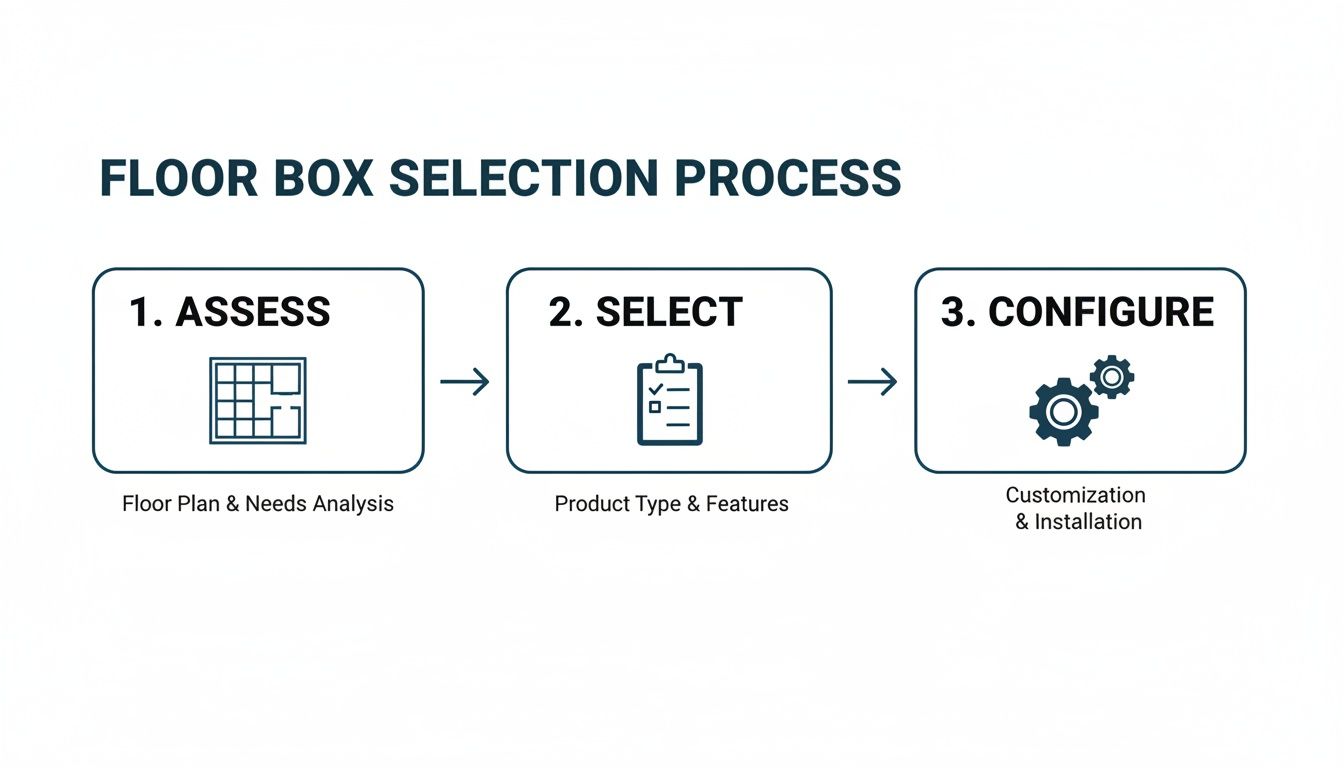
This visual guide just reinforces the importance of a structured approach, making sure every decision is based on the specific needs of your commercial building.
The market certainly reflects this need for planned, robust solutions. UK floor socket box installations have surged alongside industrial infrastructure projects. The nation is expected to capture 16.7% of Europe's $3.95 billion industrial plugs and sockets market in 2025. This growth is mirrored in new office developments, where sockets command a huge 40% market share, proving their central role in any modern commercial fit-out. As an Excel network accredited partner, we make sure every installation—whether for copper or fibre cable—is tested, certified, and backed by a 25 year equipment warranty, guaranteeing you long-term, reliable performance.
Ensuring Peak Network Performance with Structured Cabling
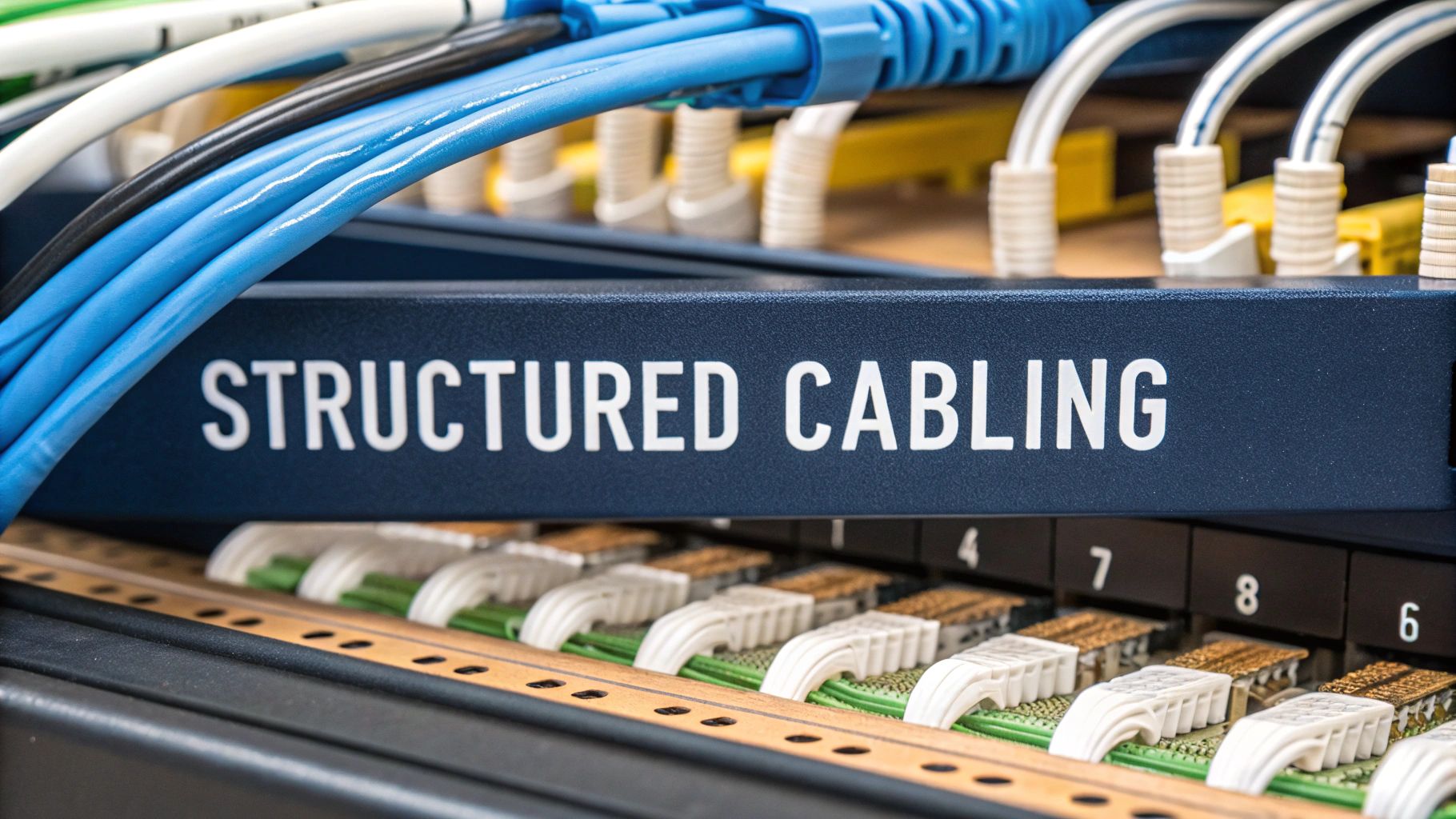
A socket floor box is only as good as the wiring that feeds it. While the box gives you a convenient access point, the real power—the speed, stability, and reliability your organisation runs on—comes from the structured cabling system hidden beneath the floorboards. This is the central nervous system of your building, and for any modern commercial building or hospital, getting it right is non-negotiable.
This hidden infrastructure is what determines whether your video calls are seamless, your data transfers are instant, and your critical business apps just work. A poorly executed cabling job, on the other hand, can turn your shiny new floor boxes into frustratingly slow connection points, crippling productivity before the day has even started.
The Anatomy of High-Performance Cabling
For most commercial environments, the network cabling will be a smart mix of copper and fibre optic solutions. Each has its own job to do, and a professional installation makes sure they work together perfectly.
Cat6 and Cat6a: These are the workhorses for everyday office connectivity. Cat6 is perfectly fine for speeds up to 1 Gigabit per second (Gbps), but Cat6a pushes that up to 10 Gbps, making it the go-to standard for future-proofing any new installation.
Fibre Cable Installation: When you need to link floors or connect communications rooms, fibre optic cable is the only real choice. It delivers incredible speed over huge distances and is completely immune to the electrical interference that can sometimes disrupt copper cables.
Weaving these different cable types into your floor box plan takes real skill. The ultimate goal is to achieve a certified, tested network delivery, where every single data outlet performs exactly as it's supposed to, every time.
Avoiding Common Data Network Mistakes
Sadly, a lot can go wrong during a cabling installation. These seemingly small data network mistakes can have a massive impact on your network's health, often leading to intermittent faults that are a nightmare to track down and fix.
Some of the most common pitfalls include:
Exceeding Cable Bend Radius: Every data cable has a limit to how tightly it can be bent. Go past that limit, and you can damage the internal wires, causing signal loss and killing performance.
Improper Termination: Connecting a cable to a socket or patch panel is a precision skill. Poor termination is one of the biggest culprits behind failed connections.
Incorrect Cable Lengths: Data cables have maximum length limits, typically 90 metres for a permanent link. Stretching beyond this leads to a weak, unreliable signal.
Lack of Cable Management: A chaotic jumble of cables in the floor void isn't just messy—it's a recipe for signal interference, difficult maintenance, and headaches when it's time to upgrade.
A professional installation is your only defence against these costly errors. It’s not just about pulling cables; it’s about engineering a system where every component is installed to exacting industry standards.
The Value of a Certified and Warrantied Network
This is where bringing in a specialist installer becomes absolutely critical. As an Excel network accredited partner, we don't just provide cabling; we deliver a promise of performance. Every installation we complete is rigorously tested and certified using advanced network analysers. This isn't a simple tick-box exercise—it's a detailed verification that each link meets strict criteria for things like signal loss, crosstalk, and bandwidth.
This certified, tested network delivery gives you solid proof that your infrastructure will perform exactly as expected. More importantly, it allows us to offer a comprehensive 25 year equipment warranty. This long-term guarantee gives you total peace of mind, knowing your investment is protected and your network is built to last.
Whether you're planning a full office relocation with equipment testing or fitting out a new commercial space, the quality of your structured cabling is everything. By entrusting it to certified experts, you ensure every socket floor box delivers the reliable, high-speed connectivity your business needs to thrive.
Installation Testing and Long-Term Reliability
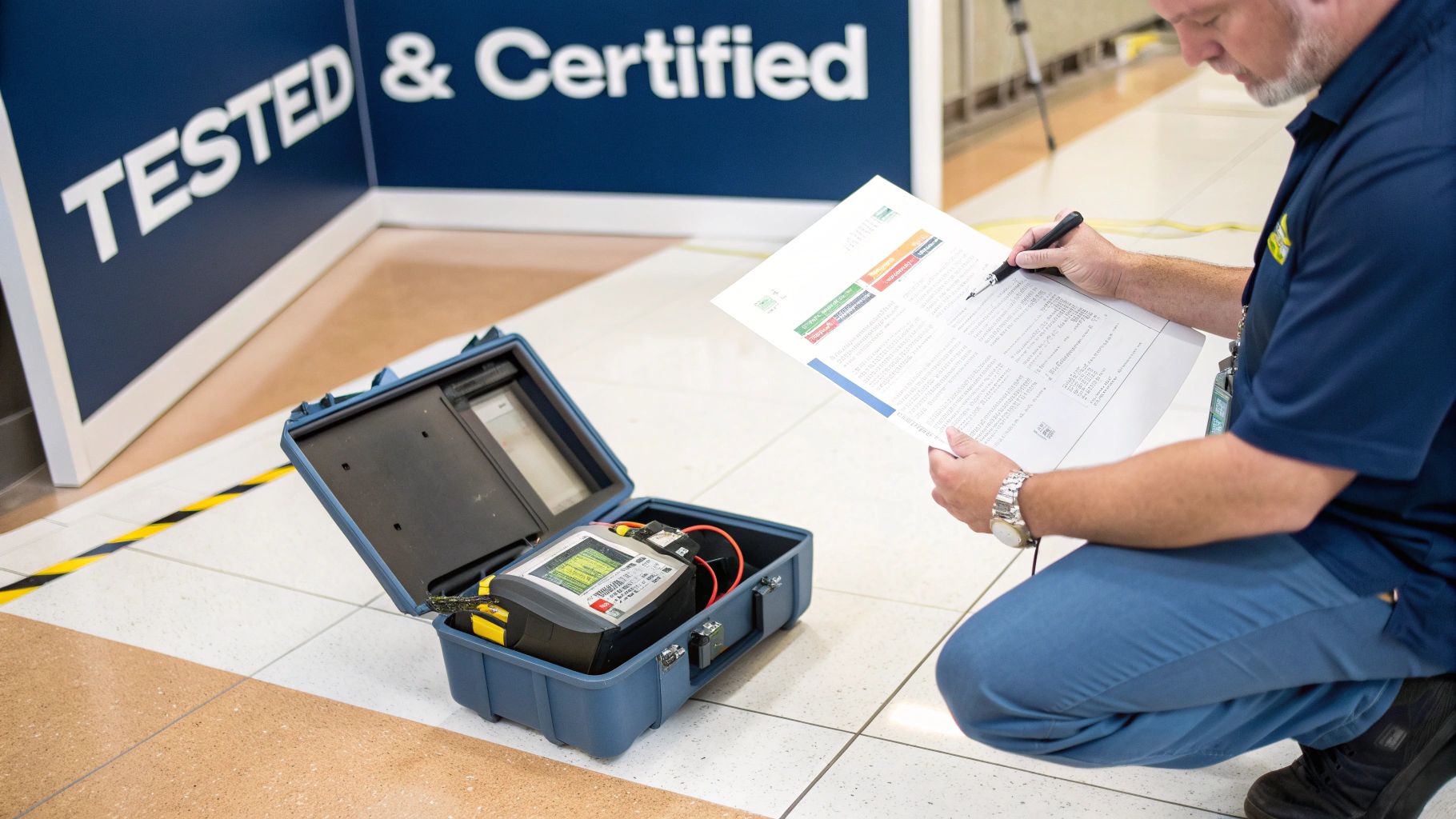
So, your new socket floor boxes are in and all the structured cabling has been pulled. It might look finished, but in reality, the most critical phase is just about to begin. The final testing and certification is what separates a professional, rock-solid system from one that’s going to cause endless headaches and network issues down the line. It's the definitive proof that every single connection performs exactly as it's supposed to. Making sure your network is tested and certified is paramount.
This step becomes absolutely vital during a complex office relocation with equipment testing. A seamless move hinges entirely on knowing your new infrastructure is perfect before your team tries to plug in a single computer. A certified, tested network delivery means no nasty surprises on day one, letting your business hit the ground running without frustrating delays or downtime.
For environments like commercial buildings or hospitals where network failure simply isn't an option, this isn't just a nice-to-have. It’s a non-negotiable requirement for operational continuity. The final test reports are your guarantee of a quality installation.
Understanding Network Certification
So, what does it actually mean to have a "certified network"? In simple terms, it means using highly specialised test equipment to check every single data cable run, from the communications room right to the final socket floor box. This process measures key performance metrics against very strict industry standards.
A "pass" certificate is far more than a piece of paper. It’s a guarantee that the connection can handle its rated speed and will perform reliably under real-world conditions. Without this, you are essentially flying blind.
As an Excel network accredited partner, this rigorous testing is baked into our process. It's how we can confidently back our work, whether it’s a copper or fibre cable installation, with a comprehensive 25 year equipment warranty. This kind of long-term assurance is only possible when every component has been proven to meet or exceed its performance specifications.
Maintaining Your Investment for Long-Term Performance
Once your certified network is up and running, a little bit of routine maintenance will keep your socket floor boxes and their connections in peak condition for years to come. Think of it as protecting your investment and preventing performance from slowly degrading over time.
A few simple but effective maintenance habits go a long way:
Regular Cleaning Protocols: Dust and debris are the sworn enemies of clean connections. Make sure cleaning the floor box lids and internal compartments is part of your regular office cleaning rota. A vacuum with a brush attachment is perfect; just avoid any harsh liquid cleaners.
Routine Visual Inspections: A quick check every quarter can stop small issues from becoming big problems. Keep an eye out for damaged lids, loose faceplates, or general wear and tear, especially in busy, high-traffic areas.
Cable Management Audits: Over time, even the most organised desk setup can turn into a tangled mess. Periodically check that patch leads aren't being strained, kinked, or creating a trip hazard around the floor boxes.
This proactive approach to cable management not only helps maintain a professional look and supports a tidy desk policy but, more importantly, it protects the physical integrity of your network connections.
The emphasis on high-quality, regulated installations is a growing trend. In fact, the United Kingdom is on track to command a significant 20.10% share of the European socket outlets market by 2025, a movement driven by demanding safety standards. This directly fuels the need for advanced socket floor boxes in new commercial fit-outs, a specific market segment that has seen a massive 82.73% spike in demand across Europe between 2021 and 2025. You can read more insights on the European socket outlets market on cognitivemarketresearch.com.
Troubleshooting and Warranty Conditions
Even on a perfectly certified network, faults can pop up now and then, usually due to accidental physical damage or simple user error. If a port suddenly stops working, a methodical approach to troubleshooting is key. The first step is always to test the device and its patch cable on a known working outlet to isolate where the problem lies.
If it turns out the outlet itself is the culprit, your certified installation reports become invaluable. They provide a performance baseline for every single port, making it much easier for a technician to diagnose the fault. Most importantly, understanding your warranty conditions means you know exactly what’s covered. With our 25 year equipment warranty, any failure related to the components or workmanship of the original installation is fully protected, giving you complete peace of mind.
Why Specialist Installation Is a Smart Investment
Deciding to install socket floor boxes is one thing, but making sure they actually perform as expected is another challenge entirely. The real value isn't in the hardware itself—it’s unlocked by the quality of the installation. A DIY or non-specialist approach might look like a good way to save a bit of cash, but it’s a shortcut that often leads to persistent connectivity drops, failed network certifications, and even serious safety hazards.
Hiring a specialist transforms the job from a simple box-fitting exercise into the delivery of a guaranteed, high-performance network for your commercial building or hospital.
A professional manages the entire process, from meticulous planning right through to coordinating with other trades during a busy office fit-out. This end-to-end oversight is what prevents the common, yet crippling, mistakes that can hamstring a network's performance from day one.
The Guarantee of a Certified and Tested Network
The single biggest difference a specialist brings to the table is the promise of a certified, tested network delivery. This isn't just about plugging a cable in and seeing a green light. It’s a rigorous, scientific process using advanced equipment to verify that every single connection—from the fibre cable installation in the main comms room to the Cat6a port at a user's desk—meets precise performance standards.
An uncertified network is an unknown quantity. A certified network is a proven asset, giving you documented assurance that your infrastructure can deliver the speed and reliability your business depends on.
This certification is also the key that unlocks a meaningful warranty. As an Excel network accredited partner, our installations are backed by a comprehensive 25 year equipment warranty. This kind of long-term protection is only offered because every component has been installed exactly as the manufacturer intended, with its performance verified.
Beyond Installation: A Future-Proof Partnership
When you bring in a specialist, you’re not just paying for an installation; you're investing in a future-proof solution. We handle every detail with precision, from practical cable management that helps maintain a tidy desk, to robust equipment testing during an office relocation. This holistic approach prevents costly rework down the line and ensures your network has the capacity to grow with your business.
A professional installation delivers far more than just working socket floor boxes. It provides:
Guaranteed Performance: Every connection is tested and proven to meet or exceed industry standards.
Long-Term Reliability: A 25 year equipment warranty protects your investment for a generation.
Operational Peace of Mind: You can be confident your network is robust, secure, and ready for whatever you throw at it next.
Ultimately, investing in a specialist is the only way to ensure your network infrastructure becomes a reliable asset, not a constant source of problems. For projects that require a seamless integration of data and power, working with accredited electrical contractors who are experts in both fields is non-negotiable. That dual expertise guarantees your entire system is safe, certified, and built to last.
Your Questions, Answered
Planning a project that involves socket floor boxes always throws up a few practical questions. Getting the details right at the start is the key to a smooth installation, so let’s tackle some of the most common queries we come across.
How Much Floor Depth Is Needed for Socket Floor Boxes?
This really comes down to the model you choose. For a standard screed floor, you'll typically need an 80-90mm void space to fit the box comfortably.
But what if you're working with a shallower floor? Don't worry, there are slimline models designed for exactly that scenario, some requiring as little as 55mm of depth. A proper site survey is the only way to know for sure what your floor can accommodate and is the first step in avoiding common data network mistakes during the build.
Can Power and Data Sockets Go in the Same Floor Box?
Absolutely. In fact, that’s exactly what modern, modular socket floor boxes are designed for. They come with segregated internal compartments that keep your standard UK power sockets safely separated from low-voltage data ports like Cat6, Cat6a, or even fibre.
This separation is vital. It stops the electromagnetic interference from power lines from messing with your data signals, which is a non-negotiable part of building a high-performance network that will pass certification. Proper cable management inside the box ensures everything stays exactly where it should.
What Is Network Certification and Why Does It Matter?
Think of network certification as the final MOT for your cabling. It’s a formal testing process where we use specialised gear to check every single cable run—from the patch panel right to the socket floor box. This process generates a detailed report proving that each connection meets strict performance standards and can handle the speeds it's supposed to.
A certified, tested network delivery from an Excel network accredited partner like us is your guarantee that the infrastructure will just work, plain and simple. It’s this professional validation that unlocks a comprehensive 25 year equipment warranty, giving you total peace of mind in your investment. This is especially critical during an office relocation with equipment testing to make sure everything is perfect from day one in your new space.
For a professionally planned and certified installation that guarantees performance and reliability, trust the experts at Constructive-IT. Learn more about our end-to-end network infrastructure services at https://www.constructive-it.co.uk.
Comments