


boosting cell signal: A Simple Office Coverage Guide
- Craig Marston
- Nov 15, 2025
- 13 min read

The real reason your mobile signal dies the second you walk into the office often has nothing to do with your network provider. Dropped calls and crawling data speeds are usually symptoms of a much bigger problem: the building itself. Modern construction materials, while brilliant for energy efficiency, can turn your workspace into a signal-blocking fortress.
Your Office Building Is the Real Signal Blocker
Ever had that critical client call drop mid-sentence? It’s rarely just bad luck. While it’s tempting to blame your mobile network, the true culprit is often the very structure you're working in. The materials used to build modern, energy-efficient offices are fantastic at keeping heat in, but they're also incredibly effective at keeping mobile signals out.
Let’s look at what your office is probably made of:
Low-Emissivity Glass: This special glass is designed to reflect heat, but it does the same thing to the radio frequency waves that carry your mobile signal.
Steel Frames and Beams: The metal skeleton inside many office blocks acts like a cage, deflecting and absorbing signals long before they can reach your phone.
Dense Concrete Walls: Reinforced concrete, a staple in larger commercial properties, is notoriously tough for mobile signals to penetrate.
The Indoor-Outdoor Signal Disconnect
This issue is becoming more and more common right across the UK. Boosting cell signal is no longer a "nice-to-have"; it's a business necessity, especially as our reliance on mobile data continues to shoot up. While network providers are expanding their outdoor coverage, indoor reliability is struggling to keep pace.
For example, 5G now covers 62% of the UK’s landmass, a huge jump from just a year ago. But that doesn't mean much when you’re inside. Over 70% of UK schools and countless commercial buildings still report poor indoor reception. This gap between outdoor availability and indoor performance is exactly why boosting cell signal is a strategic investment in your infrastructure. It’s not about switching providers; it's about engineering a solution for your specific building.
And when those dropped calls become a constant interruption, it’s also a good time to look at other ways to enhance office communication with a Hosted Virtual PBX system for more reliable voice connections.
It’s not just the building materials, either. In a busy office, you have dozens, maybe hundreds, of people all trying to connect at once. This high-density environment can strain the indoor network capacity, leading to sluggish data and unstable connections, even if you have a few bars of signal.
How to Accurately Measure Your Office Signal Strength
Before you can even think about boosting your office's mobile signal, you need a clear, objective picture of what you're working with. Forget the signal bars on your phone—they're notoriously inconsistent and differ wildly from one device to another. For a proper assessment, you need hard data.
This means measuring signal strength in decibel-milliwatts (dBm), the same standard unit network engineers rely on.
Getting this data is surprisingly straightforward. Most smartphones have a hidden ‘Field Test Mode’ that gives you a wealth of network information, including a real-time dBm reading. A quick search for your specific model (e.g., "iPhone 15 Field Test Mode" or "Samsung S24 Field Test Mode") will show you how to access it. This simple step swaps guesswork for facts.
From Numbers to a Signal Heat Map
Once you have that live dBm reading, it's time to map out your office's connectivity landscape. The goal here is to create a simple 'signal heat map'—a floor plan where you've jotted down dBm readings from different spots. This visual is invaluable for pinpointing exactly where your signal dead zones are lurking.
Take a walk around the office and grab readings in all the key areas:
Boardrooms and Meeting Rooms: Where important calls can't afford to drop.
Private Offices: Especially those buried deep in the building's core, far from any windows.
Kitchens and Breakout Areas: High-traffic zones where staff need reliable connections.
Near Windows vs. Central Corridors: This helps you see just how much of an impact building materials have on the signal.
This exercise often reveals a stark reality: modern building materials are brilliant for insulation but terrible for mobile signals. They actively block the external signal from getting inside, which is the root cause of so many indoor connectivity headaches.
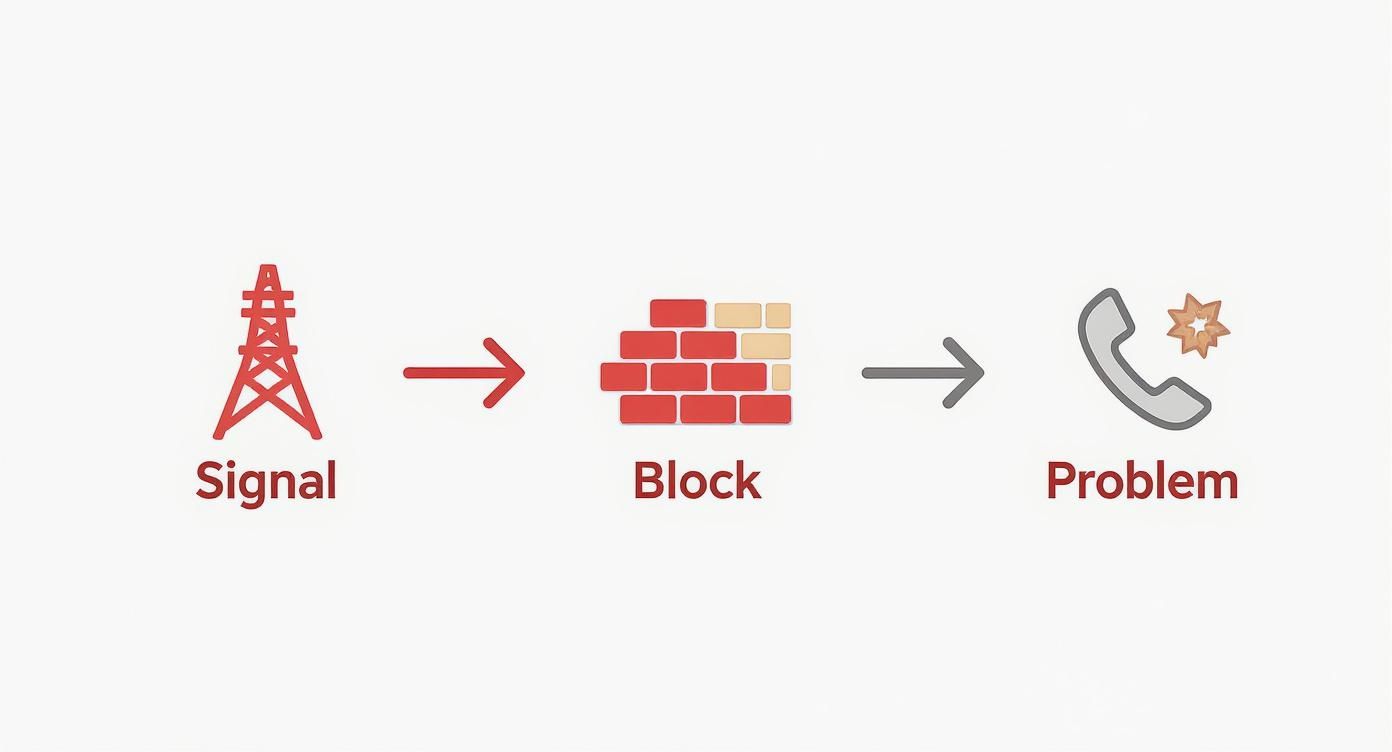
As you can see, the signal's journey from the mobile mast to your phone is often cut short. This is precisely the problem that signal boosting technology is built to solve.
Interpreting Your Signal Strength Data
With your heat map in hand, you can start making sense of the numbers. It’s a bit counterintuitive, but the dBm scale is negative, so a number closer to zero is actually stronger. A reading of -50 dBm is fantastic, but if you're seeing -120 dBm, you're in a total dead zone where making a call is next to impossible.
A signal reading between -100 dBm and -120 dBm is the frustrating zone where you'll suffer from the most frequent dropped calls and painfully slow mobile data. Identifying these specific areas is the key to planning an effective solution.
This data-driven approach takes all the ambiguity out of the equation. You now have solid proof of where your office's signal weaknesses are. To get the full picture, it's also worth understanding where the signal is coming from in the first place. A great next step is learning about finding mobile mast locations in the UK. Combining that knowledge with your internal heat map gives you everything you need to move forward.
Choosing the Right Signal Boosting Technology
Now you’ve got the hard data mapping out your office’s signal weaknesses, it’s time to pick the right tool for the job. Boosting your mobile signal isn’t a one-size-fits-all affair; the best solution really depends on your office size, its layout, and just how many people need a solid connection.
Your two main contenders are standard multi-network signal boosters and the more powerful Distributed Antenna Systems (DAS).
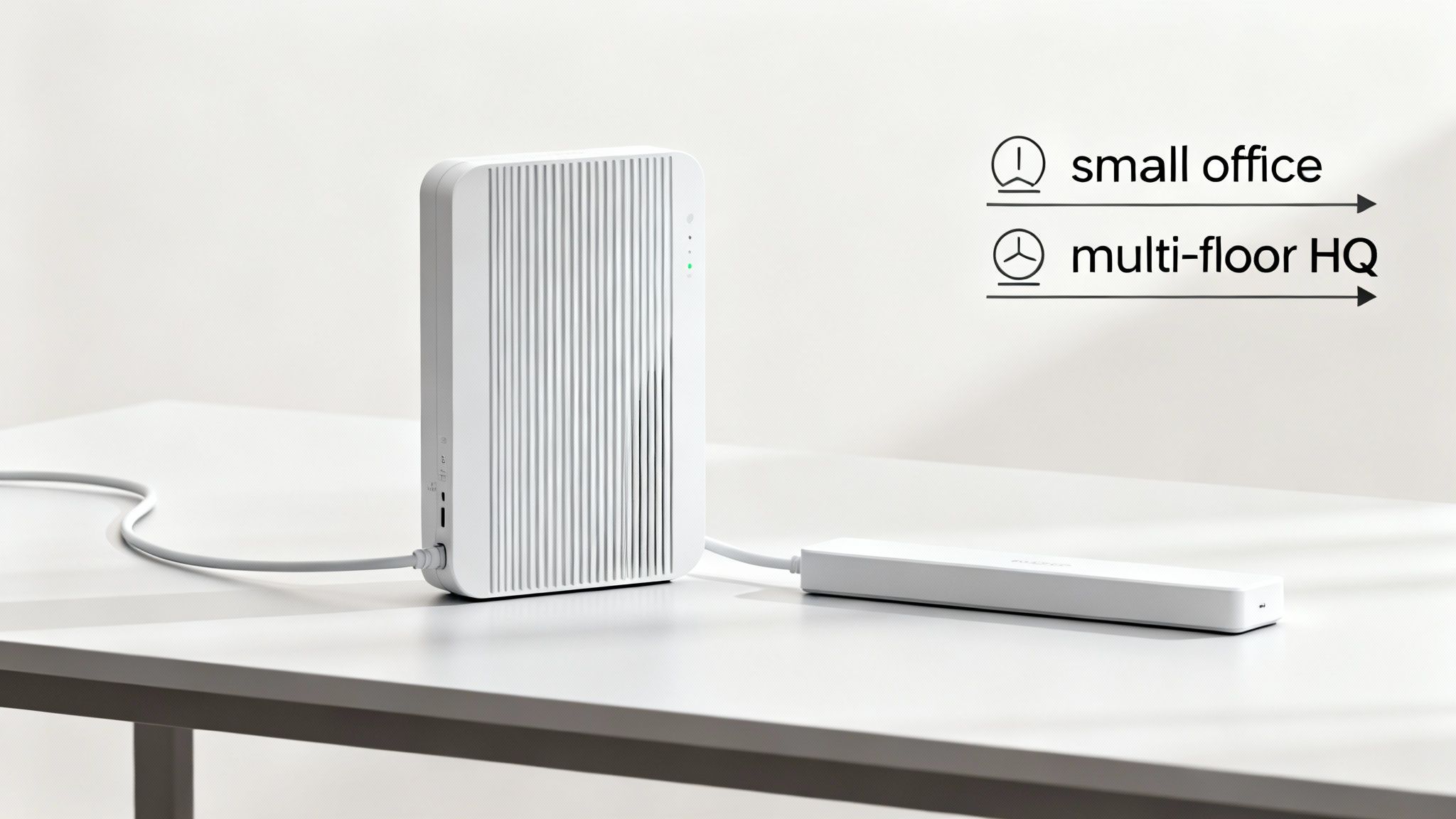
Making the right choice means taking a hard look at your specific environment. A small start-up in a single-floor unit has completely different needs compared to a corporate headquarters sprawling across multiple floors. It's not just about your building, either. Performance hinges on the quality of the signal you can capture outside, which varies massively between UK network providers.
The effectiveness of any system is directly tied to the mobile networks in your area. For instance, recent analysis from umlaut shows that EE leads the UK market with a coverage quality score of 98.9% and a reach of 96.4%. Vodafone is hot on their heels, while O2 and Three have different performance profiles. These numbers are crucial because a booster can only amplify what’s already available. You can dive deeper into the stats by checking out this UK mobile network performance report to see how local providers stack up.
Standard Signal Boosters: Ideal for Smaller Spaces
For smaller offices—think anything under 1,500 square metres—a standard multi-network signal booster is usually the most practical and wallet-friendly option. These systems work by capturing the existing external signal, amplifying it, and then rebroadcasting it indoors through one or more internal antennas.
They are particularly well-suited for:
Open-plan offices where there are minimal internal walls to block the signal.
Retail units or small clinics that just need to target specific dead zones.
Businesses that need to support multiple networks (like EE, Vodafone, and O2) all at once without a complicated setup.
This kind of tech is a big step up from the basic kits you might find online. However, their power can be limited by the building's internal structure and how strong that initial signal is. It’s a common challenge, and you can read more about it in our guide to finding a signal booster for an iPhone.
When to Consider a Distributed Antenna System (DAS)
When you're dealing with a large, multi-level building, dense construction materials, or a high number of users, a standard booster just won’t cut it. This is where a Distributed Antenna System (DAS) comes into its own as the superior solution for boosting mobile signal.
A DAS is a professionally engineered network of antennas connected by high-performance cabling (often via fibre cable installation) to a central signal source. It’s designed from the ground up to provide uniform, high-capacity coverage across vast and complex spaces, overcoming the physical barriers that defeat simpler systems.
To help you weigh the options, here's a quick comparison of how these two technologies stack up.
Signal Booster vs Distributed Antenna System (DAS)
Feature | Cell Signal Booster | Distributed Antenna System (DAS) |
|---|---|---|
Best For | Small to medium-sized offices (under 1,500 sq m), open-plan layouts, retail spaces. | Large buildings, multi-floor offices, high-density user environments, complex structures. |
Coverage Area | Limited; performance can degrade with distance from the internal antenna. | Extensive and uniform; designed to cover entire buildings or campuses consistently. |
Installation | Relatively straightforward, but professional installation is still recommended for Ofcom compliance. | Highly complex; requires professional design, engineering, and installation. |
Cost | More affordable initial investment, making it a budget-friendly choice. | Significant investment required, reflecting its custom engineering and scale. |
Network Support | Typically supports multiple networks (e.g., EE, Vodafone, O2) out of the box. | Can be network-specific (carrier DAS) or multi-network (neutral-host DAS), offering more control. |
Ultimately, while a standard booster is great for smaller, simpler spaces, a DAS is the only way to guarantee seamless coverage in a large, modern office complex.
The Professional Installation Non-Negotiable
Whichever technology you land on, professional installation is non-negotiable. It’s crucial for both performance and legality. An accredited partner ensures the entire system is Ofcom-compliant, which prevents it from interfering with public mobile networks. This is absolutely not a DIY project.
A professional installation guarantees:
A certified, tested network delivery, ensuring you get optimal performance from day one.
Expert cable management using high-grade fibre or coaxial cables for a clean, reliable setup that keeps your office looking professional and every desk tidy.
A 25 year equipment warranty, which is common when working with an Excel network accredited partner, protecting your investment for the long term.
This expertise is essential, particularly during complex projects like an office relocation with equipment testing, ensuring all systems are re-certified. Partnering with a certified installer means your system isn’t just effective—it’s legally sound and built to last.
What to Expect from a Professional Installation
A powerful signal boosting system is only as good as the team putting it in. Choosing a professional installation goes way beyond just plugging in hardware and hoping for the best; it’s about engineering a reliable, long-term solution that fits right into your office environment. It’s a far more detailed process than any DIY setup.
The journey doesn't start with tools, but with data. A professional team will carry out a thorough site survey, building on the basic signal heat map you might have already created. They use specialised equipment to get precise readings, pinpointing the best spots for both the external and internal antennas to guarantee maximum signal capture and distribution. This detailed planning phase is the foundation for a flawless installation.
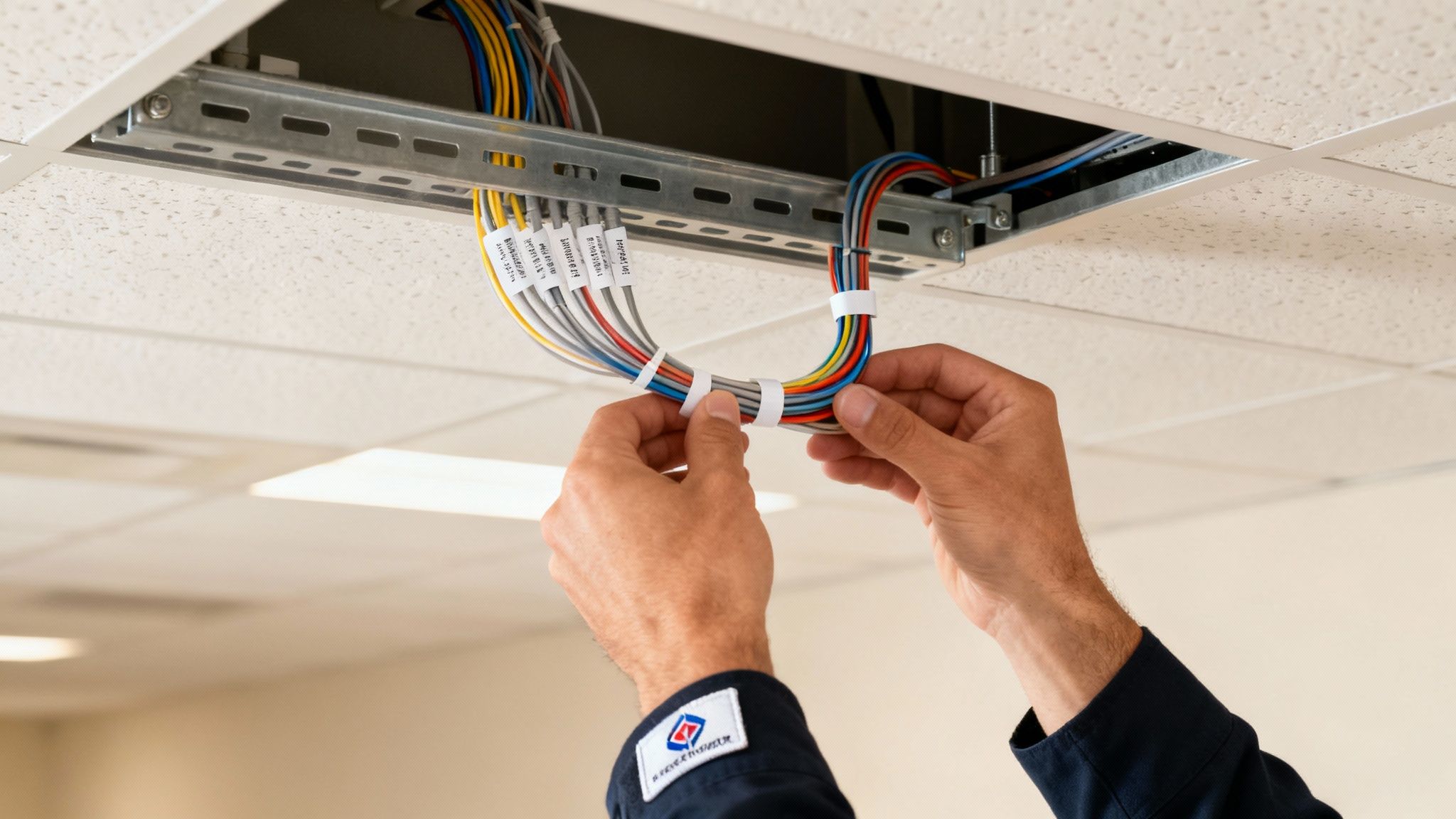
This initial survey then feeds into a custom system design, built specifically for your office's unique layout and needs—whether that means targeting a few dead zones or providing solid coverage across multiple floors.
The Importance of Certified Expertise
Picking the right installation partner is just as critical as choosing the right technology. Working with an Excel network accredited partner brings some serious advantages that protect your investment and guarantee performance. This accreditation isn't just a badge; it's a mark of quality that shows the installers are trained to the highest industry standards.
One of the biggest perks is getting access to far better warranties. An accredited partner can offer a 25 year equipment warranty, which gives you incredible peace of mind that your system is built to last. You simply won't get that level of assurance with an off-the-shelf kit or a non-certified installer.
This certification also ensures a fully certified, tested network delivery. Every single component, from the antennas to the amplifiers, is rigorously checked against performance benchmarks. This process makes sure your system is not just effective but also fully compliant with UK regulations. For businesses needing rock-solid connections, exploring professional telephony and data connectivity solutions is a vital step in building a resilient infrastructure.
A professional installation provides more than just a strong signal; it delivers a certified, documented, and warrantied asset for your business. This formal process is essential for compliance and ensures the system functions flawlessly from day one.
Meticulous Cabling and Future-Proofing
The actual installation involves carefully running high-performance fibre cable or low-loss coaxial cabling. This is where professional expertise really makes a difference. The installers focus on meticulous cable management, making sure all wiring is neatly hidden away in walls, ceilings, or trunking. This isn't just about keeping the office looking professional with every tidy desk; it prevents accidental damage, makes future maintenance easier, and upholds health and safety standards.
A professional job always has one eye on the future, too.
Scalability: The system is designed from the ground up to handle growth, making it straightforward to expand coverage when your team gets bigger.
Office Relocation: If you move, an accredited partner can manage the entire office relocation with equipment testing, taking the system down, moving it, and re-installing it, including full certification in the new space.
Technology Upgrades: The structured cabling approach makes it much simpler to swap out and upgrade components as new mobile technologies come along.
Ultimately, a professional installation turns the complex task of boosting your mobile signal into a smooth, predictable process that delivers immediate and lasting results.
Maintaining Performance and Planning for the Future
So, your new signal boosting system is live and the office finally has reliable connectivity. That’s great news, but the job isn’t quite finished. It’s easy to think of this as a one-time fix, but that’s a mistake. Your system is a dynamic asset, and it needs a bit of awareness to keep delivering value as your business grows.
While professionally installed systems are incredibly reliable, external factors can always shift. New construction nearby or even changes to the local network towers can subtly degrade performance over time. Keep an eye out for any dips in signal quality and have your installation partner on standby if you notice persistent issues. A certified provider can diagnose and sort out problems quickly, ensuring minimal disruption.
Future-Proofing Your Office Connectivity
Boosting your mobile signal isn’t just about solving today’s dropped calls; it’s about preparing for what’s next. As network technologies evolve, so will your team's communication needs.
The rapid adoption of 5G in the UK is a perfect example. An Ofcom study found that 28.3% of all network connection attempts in the UK were made on 5G networks, a huge jump from the previous year. This shift puts even more pressure on indoor signal strength. Staying informed about the impact of 5G on communication technology is key to understanding what your office will need in the years to come.
A professionally designed system, especially one using structured fibre cable, is already built with the future in mind. This kind of robust infrastructure can be adapted for future technology upgrades without needing to rip out and replace all your cabling.
Seamless Office Relocation and Growth
As your business grows, you might find yourself planning an office relocation. This is a massive project where business continuity is everything. This is another area where partnering with a professional installer really pays off, as they can manage your entire connectivity infrastructure during the move.
An accredited partner handles the whole process from start to finish:
Decommissioning: Safely powering down and uninstalling all the existing hardware.
Relocation: Securely transporting every component to your new premises.
Re-installation: Setting up the system in the new location and adapting the design to the new layout.
Testing and Certification: Running a full suite of tests to guarantee performance and provide a certified, tested network delivery in your new space.
This expert management of office relocation with equipment testing means your signal boosting solution moves right along with you, providing perfect connectivity from day one. It’s a proactive approach, backed by a 25 year equipment warranty from an Excel network accredited partner, that secures your investment for the long haul.
Got Questions About Boosting Your Office Signal?
Deciding to invest in better mobile signal for your office is a big move, and it's completely normal to have a few questions before you commit. Getting these sorted upfront will give you the confidence that you're making the right call for your business's connectivity.
Let's run through some of the most common queries we hear from businesses weighing up their options.
Are Mobile Signal Boosters Actually Legal in the UK?
Yes, they are, but with a very important catch. For a signal booster to be legal in the UK, it must be ‘licence-exempt’ and meet the strict technical standards laid out by Ofcom. Using a non-compliant booster is illegal because it can cause serious interference with the public mobile networks, and that can land you in hot water with some hefty penalties.
This is exactly why bringing in a professional installer is non-negotiable. They will only ever use certified, tested equipment that’s guaranteed to be 100% Ofcom-compliant. You get an effective solution that is completely above board.
Will a Booster Work if I Have Zero Signal Outside?
Unfortunately, no. A signal booster is an amplifier, not a magic wand. It works by taking an existing, usable signal from outside and making it stronger inside your building. It can't create a signal from nothing.
For any system to work, there has to be at least a faint, stable signal outside that the external antenna can lock onto. A professional site survey is the only reliable way to measure the signal strength around your building and confirm if it's strong enough for a booster to be a worthwhile investment.
How Different is a Professional Install from a DIY Kit?
The difference is night and day, and it affects everything from performance to the system's lifespan. A professional installation isn't just about buying a box; it's a fully managed service.
Here’s what you get:
A Tailored Design: It all starts with a proper site survey. This allows for a custom system design that’s mapped specifically to your office layout, construction materials, and unique signal dead spots.
The Right Tools for the Job: Professional installers use specialised test gear to find the optimal placement for antennas, ensuring you get the best possible coverage and performance from day one.
Guaranteed Quality: This is the big one. Working with an Excel network accredited partner means you get certified equipment, meticulous cable management, and a 25 year equipment warranty. You simply don’t get that level of assurance or quality from an off-the-shelf kit.
Can a Signal Booster Really Improve My Mobile Data Speeds?
Absolutely. A stronger and more stable mobile signal (which we measure in dBm) has a direct impact on your 4G and 5G data speeds. By cleaning up the connection between your phone and the local mast, a booster drastically reduces things like data packet loss and latency.
This means your team will see much faster downloads, enjoy glitch-free video calls, and find their mobile internet experience far more responsive. Boosting your signal isn't just about making clearer calls; it's about giving your entire mobile data capability a serious upgrade.
Ready to put an end to dropped calls and crawling data speeds in your office? The expert team at Constructive-IT designs and delivers fully certified and warrantied signal boosting solutions across the UK. Get in touch today to schedule your consultation.
Comments