


Your Essential Guide to Data Cabling Installation
- Craig Marston
- Dec 10, 2025
- 16 min read

A professional data cabling installation is the physical foundation of your entire business network. It’s what connects everything from the PCs on your desks and the phones you use for calls to the Wi-Fi access points dotted around the ceiling. The process involves strategically planning and installing a system of cables—usually high-performance copper or a fibre cable installation—to ensure reliable, lightning-fast data transmission throughout your office.
This isn't just about running a few wires from A to B. It's a meticulously structured process that guarantees performance, scalability, and long-term stability for every single one of your digital operations.
Why Your Business Needs a Solid Cabling Foundation
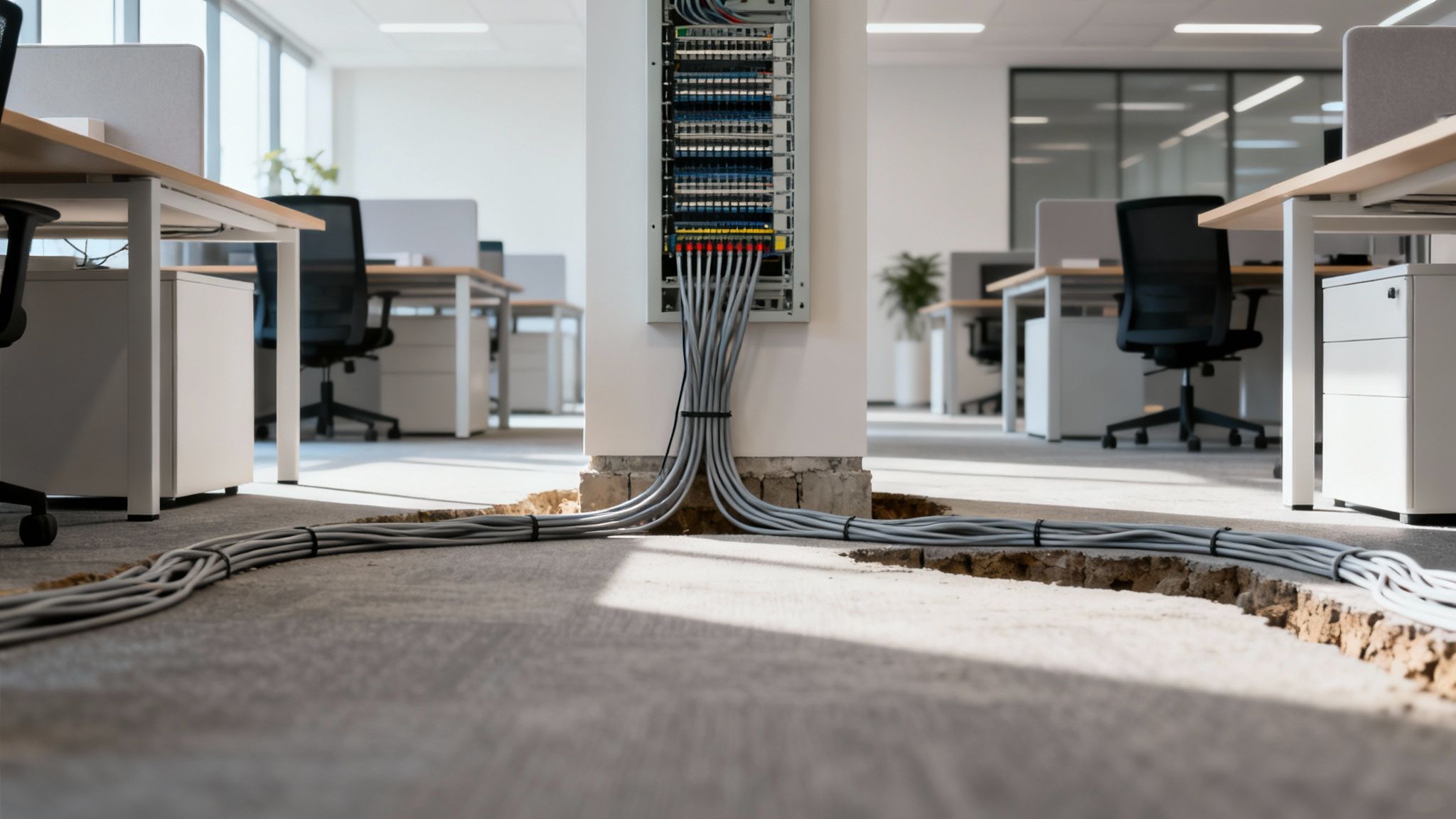
Think of your data cabling as the central nervous system of your company. A building needs a solid foundation to stand strong, and in the same way, your organisation needs a robust cabling infrastructure to support every digital interaction. Without it, even the most advanced, expensive software and hardware will grind to a halt.
A poorly planned or shoddily executed installation inevitably leads to frustrating bottlenecks, unreliable connectivity, and frequent, productivity-killing downtime. In stark contrast, a professionally designed and installed system provides the unbreakable stability needed for everything from crisp VoIP phone calls and lag-free video conferences to critical cloud services. This structured, organised approach is the bedrock of any productive and efficient workplace.
The Value of Certified and Warrantied Installations
Partnering with a certified expert for your data cabling installation completely changes the game. For instance, working with an Excel network accredited partner like us gives you access to significant benefits that protect your investment for decades to come. This accreditation is much more than a logo on a van; it's a guarantee of quality, strict adherence to industry standards, and proven expertise in deploying high-performance networks.
Key advantages include:
A 25-Year Equipment Warranty: A comprehensive 25 year equipment warranty that covers every single component, giving you complete peace of mind that your network is genuinely built to last.
Certified and Tested Network Delivery: Every cable is rigorously tested with specialist equipment for a certified, tested network delivery, ensuring your network meets or exceeds the required speed and reliability standards from day one.
Professional Cable Management: A certified installation means neat, organised, and labelled cabling. This professional cable management contributes to a tidy desk, far easier maintenance, and improved health and safety.
A structured cabling system isn't just an IT expense; it's a long-term business asset. It ensures your company can seamlessly adapt to new technologies and supports your growth without needing a complete, costly overhaul every few years.
Future-Proofing for Office Relocations and Upgrades
Whether you're planning an office relocation, a major fit-out, or an upgrade to your existing space, your network infrastructure is one of the most critical components of a successful transition. A professional installation partner will manage the entire process, from planning the new layout and cable routes to conducting post-move office relocation with equipment testing.
This methodical approach guarantees your team is fully operational from the moment they walk into the new office. It completely prevents the costly disruptions that can cripple a business during a move, ensuring a smooth and productive start. For a deeper look into the components that make up this system, you can explore our detailed guide on what network infrastructure is and how it forms your business backbone.
Choosing the Right Cable: Copper vs Fibre Optic
When it comes to your data cabling installation, one of the first big decisions you'll face is the cabling itself. It's a choice that will directly shape your network's speed, reliability, and ability to handle future demands. The two main players are traditional copper cables, like Cat6 and Cat6a, and the more advanced fibre optic option. Getting to grips with what each does best is the key to designing a network that’s both high-performing and cost-effective.
Think of copper cabling as the UK's vast and reliable motorway network. It’s everywhere, it’s dependable, and it handles the bulk of everyday traffic perfectly. For connecting individual PCs, VoIP phones, printers, and Wi-Fi access points, copper is the absolute workhorse. In most office settings, it provides all the bandwidth you need at a really sensible price point.
Fibre optic cable, on the other hand, is the high-speed bullet train. It’s built for one thing: moving huge amounts of data at incredible speeds over long distances. If you need to connect entire buildings, link multiple floors in a high-rise, or run a high-capacity backbone to a data centre, a fibre cable installation is really your only option.
When to Use Copper Cabling
For the majority of what we call 'horizontal cabling'—the runs that stretch from the communications cabinet out to each user's desk—Cat6 or Cat6a copper is the smart, practical choice. It delivers brilliant performance for day-to-day business and is relatively straightforward for a certified engineer to install and terminate.
This choice is all about hitting that sweet spot between performance and budget. Of course, there's more to it than just copper vs fibre; choosing the right network LAN cable also involves considering your specific environment and performance goals.
The Power of Fibre Optic Installation
While copper handles that final connection to the desk, a fibre cable installation is what gives your network its powerful core. It's completely immune to electromagnetic interference, which makes it perfect for electrically 'noisy' places like factories or plant rooms. Plus, it can send data for kilometres without the signal weakening.
Businesses typically bring in fibre for a few key reasons:
Connecting Buildings: Linking separate offices across a campus is a classic job for fibre, thanks to its long-distance muscle.
Vertical Risers: In multi-storey buildings, a fibre backbone is essential for guaranteeing high-speed connectivity between all the floors.
Data Centre Links: It provides the enormous bandwidth needed to connect server rooms and data centres effectively.
Future-Proofing: Installing a fibre backbone today means your network is ready for whatever bandwidth-hungry applications tomorrow throws at it.
Choosing between copper and fibre isn't an "either/or" decision. The most effective network designs use a hybrid approach, leveraging the strengths of both to create a powerful, efficient, and scalable infrastructure.
Copper vs Fibre Optic: a Practical Comparison
To make the decision clearer, here's a straightforward look at how copper and fibre stack up against common business needs. This table should help you see where each technology shines.
Factor | Copper Cabling (Cat6/Cat6a) | Fibre Optic Cabling |
|---|---|---|
Best For | Desktop connections, VoIP phones, Wi-Fi access points | Building-to-building links, data centre connections, network backbones |
Distance Limit | Approximately 100 metres | Can run for several kilometres |
Speed/Bandwidth | Good (up to 10 Gbps for Cat6a) | Exceptional (over 100 Gbps is common) |
Cost | More affordable for shorter, standard connections | Higher initial cost, but essential for high-capacity links |
Interference | Susceptible to electromagnetic interference (EMI) | Completely immune to EMI |
Ultimately, a smart network design uses both. You get the cost-effectiveness of copper for the everyday connections and the raw power of fibre for the heavy lifting.
The demand for this kind of robust infrastructure is soaring. The UK structured cabling market, a core part of any data cabling installation, brought in around USD 858.6 million in a recent year. That figure is expected to almost double to roughly USD 1.68 billion by 2033, all driven by our ever-growing need for fast, reliable connectivity.
This hybrid approach ensures you aren’t overspending on connections that don’t need blistering speed, while still building a powerful core that can handle future growth. To get a better feel for what it can do, have a look at our quick guide: https://www.constructive-it.co.uk/post/fibre-optic-cable-quick-guide-to-fast-reliable-networking. By working with a certified installer, you can make sure each cable type is deployed correctly, tested thoroughly, and woven into a single, high-performance system.
The Professional Data Cabling Installation Process
A proper data cabling installation isn’t a weekend DIY job. It's a carefully planned project where each stage builds on the last, ensuring the network you end up with is robust, reliable, and ready for whatever your business throws at it. This structured approach is the difference between a professional installer and a cowboy, and it's the key to consistent network performance.
The whole thing kicks off with a detailed site survey. A specialist will visit your premises to get the lay of the land, spotting potential obstacles and getting to grips with how your business actually operates. This is about more than just measuring walls; it’s a deep dive into your workflow, user density, and future growth plans. This survey becomes the blueprint for the entire project.
Once the survey is done, we move into the design and routing phase. This is where the physical routes for the cables are meticulously mapped out. The aim is to create pathways that are efficient, logical, and easy to expand on later, all while sticking to industry standards. Proper planning here ensures cables are protected, accessible for maintenance, and kept well away from sources of electrical interference that can wreak havoc with your signal. For a glimpse into the level of detail required, even on a smaller scale, check out a simple guide for fiber optic home installation.
From Cable Runs to Tidy Desks
With the plan in place, the real work begins. The core installation phase is all about pulling the cables through the planned routes—whether that's through ceilings, under floors, or along wall trays. Our certified engineers then get to work terminating each cable, connecting one end to the patch panels in the comms cabinet and the other to the outlet plates in your workspace.
Expert cable management is absolutely non-negotiable at this point. In the server room, every cable is neatly organised, bundled, and clearly labelled. It might seem like a small detail, but this precision isn't just for looks. It makes future troubleshooting and upgrades a breeze, preventing the dreaded "spaghetti cabling" that gives IT managers nightmares.
The quality of your cable management in the server rack is a direct reflection of the professionalism of the installation. A tidy cabinet leads to a tidy, functional, and hazard-free office environment.
This behind-the-scenes neatness translates directly to a tidy desk for your team. When cables are routed and terminated properly, you get no trip hazards, no tangled mess under desks, and a much cleaner, more professional-looking workspace for everyone.
This visual guide shows the simplified flow from assessing your requirements to final installation.
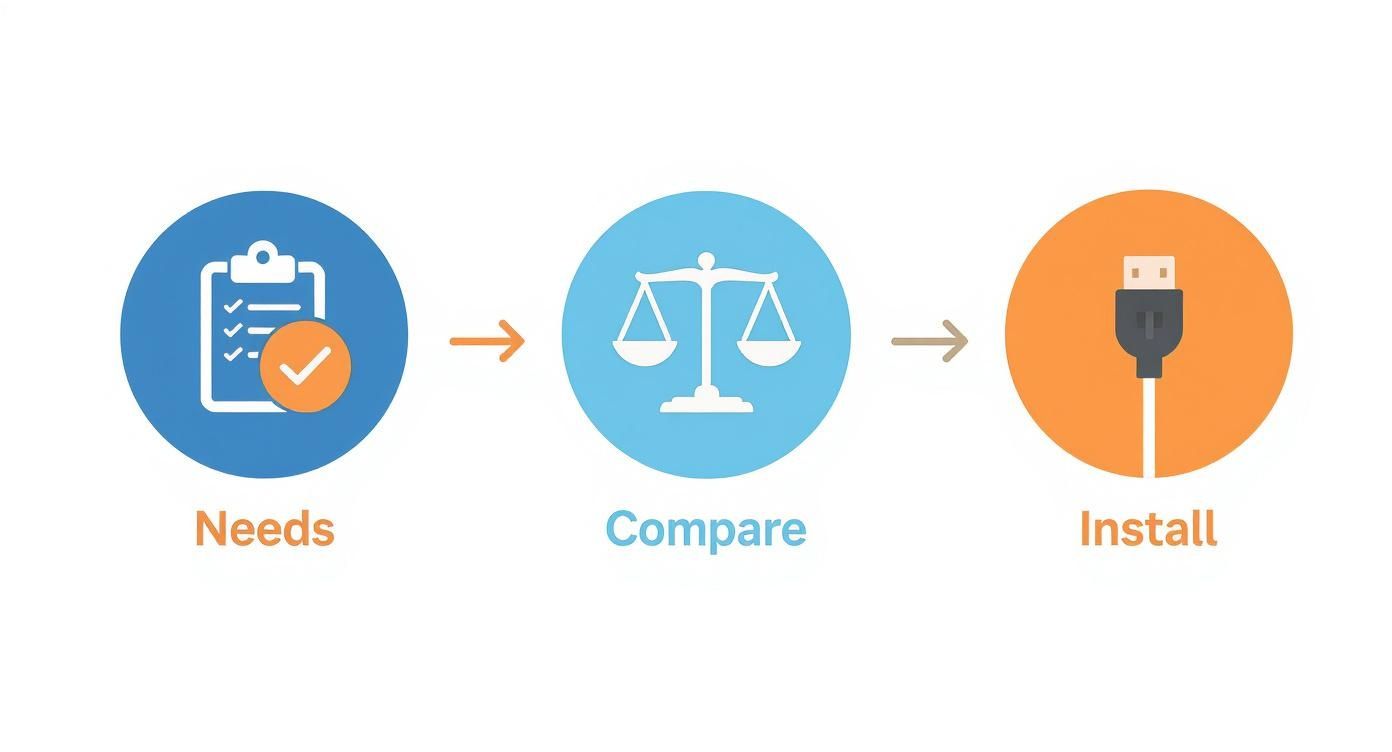
As you can see, a successful project is built on careful planning before a single cable is even unboxed.
Certified Delivery and Office Relocation Support
After everything is installed, the network goes through rigorous certified, tested network delivery. Using specialised test gear, every single cable is checked to make sure it meets strict performance benchmarks for speed and signal quality. You get a detailed report that proves every connection has passed, giving you documented peace of mind.
This methodical process is particularly vital during an office relocation with equipment testing. A professional installer manages the entire cabling part of your move. They’ll design the infrastructure for the new site, carry out the full installation, and then perform thorough equipment testing after the move to make sure your team is online and productive from day one. To see what this involves in more detail, have a look at our UK office network wiring installation guide.
Choosing an Excel network accredited partner ties all these elements together. This certification is your guarantee that the installer works to the highest standards of design, installation, and testing. It’s also what unlocks the comprehensive 25 year equipment warranty, giving you long-term assurance that your network foundation is solid, reliable, and built to support your business for years to come.
Why Certified Testing and Warranties Are Essential
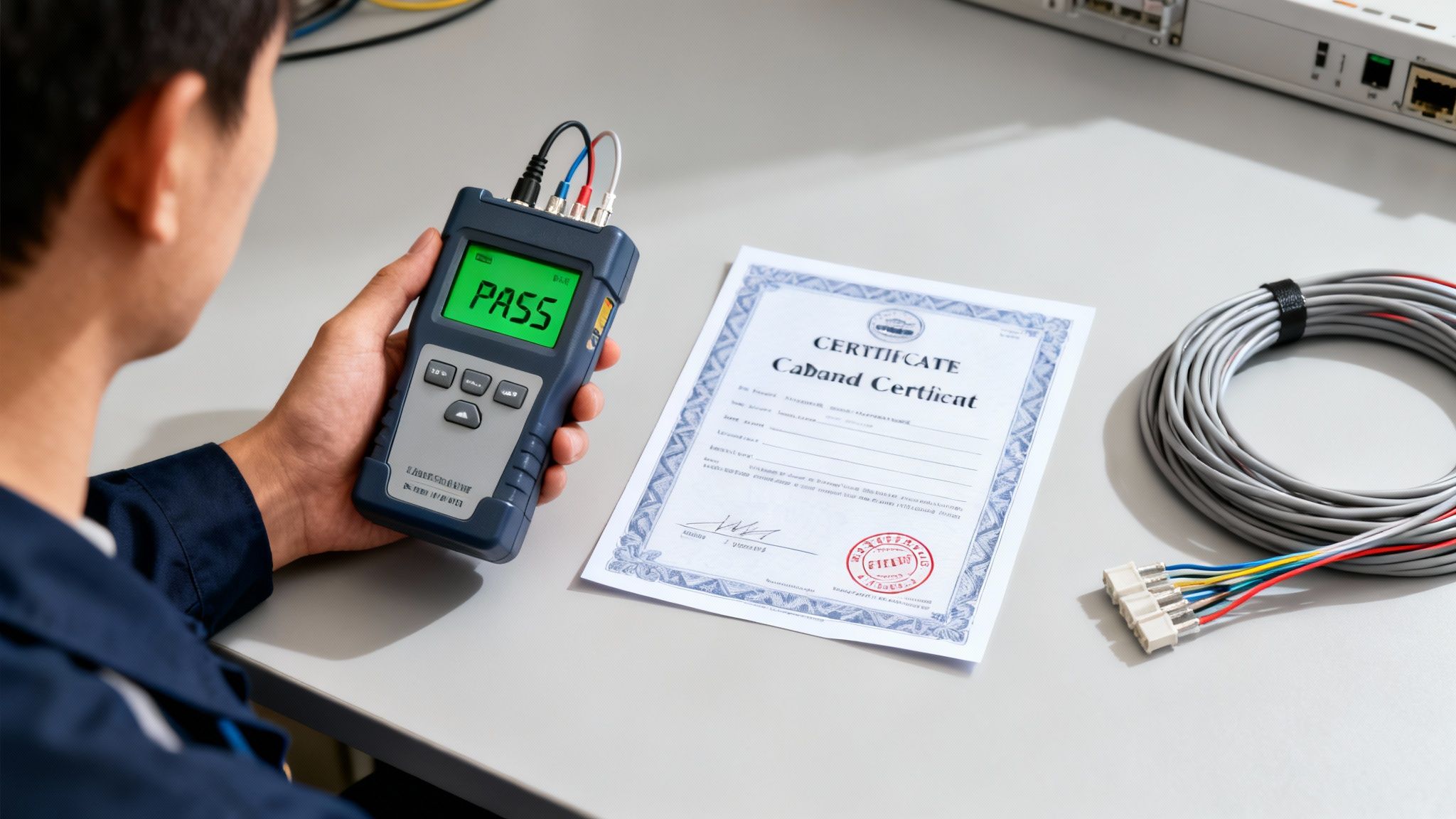
So, the last cable has been neatly terminated and the final faceplate is clicked into place. Job done, right? Not quite. In fact, the most critical step in any professional data cabling installation is only just beginning. This is the stage of certified, tested network delivery, and it’s what separates a rock-solid, high-performance network from one plagued by mysterious slowdowns and frustrating connection drops.
Simply plugging in a laptop and seeing it connect to the internet isn't a test; it's a guess. A professional installation goes much, much deeper. It involves using highly specialised, calibrated equipment to put every single cable run through its paces, certifying that it meets strict international standards for speed, signal integrity, and data throughput. Think of it like an MOT for your network—each cable has to pass a battery of tests before it's deemed roadworthy.
Getting a detailed report with a ‘PASS’ for every single connection is your documented proof of quality. It’s the confirmation you need that the infrastructure has been installed correctly and is fully capable of delivering the performance you’ve paid for, both today and for years to come.
The Power of Accreditation and Long-Term Guarantees
This rigorous testing process is directly tied to the value of working with accredited installers. When you partner with an Excel network accredited partner, for instance, you unlock one of the most powerful assurances in the industry: a comprehensive 25-year equipment warranty.
This isn’t just a simple promise that a component won’t break. It’s an application warranty. This guarantees your system will continue to support the applications it was designed for—like 10 Gigabit Ethernet—for the entire warranty period. This long-term protection covers every single link in the chain, from the patch panels and cables right through to the outlets on the wall.
A 25-year warranty isn't just an add-on; it's your network's insurance policy. It secures your investment, eliminates the financial risk of premature component failure, and provides complete peace of mind that your infrastructure is built to last.
Ensuring Performance During Office Relocations and Upgrades
Certified testing becomes even more critical during complex projects like an office relocation with equipment testing. Once your entire IT setup has been moved, a professional partner will re-test every connection to make sure nothing was damaged in transit and that the new network is performing flawlessly from day one.
This meticulous approach prevents the costly chaos of your team arriving at a new office only to find the network is unreliable or completely down. It’s that final, vital check that guarantees a smooth transition and immediate productivity.
Certified Performance: Guarantees that every cable, including a new fibre cable installation, meets its speed and reliability specifications.
Troubleshooting Prevention: Catches potential issues like faulty terminations or cable damage before they can ever impact your business.
Documentation for the Future: Provides a detailed baseline report of your network’s health, which is invaluable for future maintenance and upgrades.
The UK's digital infrastructure is constantly advancing, with a clear trend towards more robust, high-capacity cabling. In a recent quarter, fixed broadband connections hit 28.92 million, and high-speed Fibre to the Premises (FTTP) lines jumped by 8%, now totalling 9.86 million. This nationwide upgrade shows just how much demand there is for reliable networks that can only be guaranteed through certified testing. You can explore more data on UK ISP and network supplier metrics from Point-Topic.
Ultimately, investing in a certified installation backed by a long-term warranty ensures your network isn't just functional, but a dependable, high-performance asset built for the long haul.
Planning Your Network for an Office Relocation
An office move is a rare chance to get your network infrastructure right from the ground up, without being tied down by an old, awkward layout. It’s the perfect moment to stop patching up old problems and start designing a system that genuinely supports your business goals. Getting a data cabling installation specialist involved early is one of the smartest moves you can make; it helps you sidestep costly, last-minute fixes and ensures your team can hit the ground running on day one.
Thinking ahead turns your network planning from a potential headache into a strategic advantage. It lets you map out your infrastructure to perfectly match the new office's physical space and your company's future plans. Skip this step, and you could walk into your shiny new office only to find the existing wiring is outdated, in all the wrong places, or simply can't handle what your business throws at it.
Auditing Your Current Setup
Before you can build the future, you need to know exactly what you’re working with right now. The first step is a thorough audit of all your current network gear and cabling. This isn't just about counting switches and PCs; it's about digging into performance, finding those frustrating bottlenecks, and deciding what’s good enough to bring with you.
This audit should give you clear answers to a few key questions:
Performance: Is your current hardware actually keeping up, or is it the reason for those afternoon slowdowns?
Age and Condition: Are your routers, switches, and other bits and pieces getting a bit long in the tooth and approaching their end-of-life?
Scalability: Can the equipment you have now realistically support your business growth over the next five years?
Getting this down on paper gives you a solid inventory, making it easy to see which assets are coming with you and what legacy tech needs to be retired.
Designing for Your New Workspace and Future Growth
Once you’ve got a handle on your needs, the fun part begins: designing the structured cabling system for your new office. This is your opportunity to build a network that fits your team's workflow like a glove. A professional installer will help you map out the best locations for data points, ensure total Wi-Fi coverage, and design a comms room with proper cable management built in from the start.
This is also the perfect time to think about upgrades. Could a fibre cable installation for your network backbone give you the speed you need for future, data-hungry applications? The goal is to create a clean, organised, and efficient system that supports a tidy desk policy and is a breeze to manage down the line.
An office relocation is the ultimate network reset button. It allows you to move beyond the limitations of your old setup and build an infrastructure that is not just new, but strategically designed for performance and growth.
The Critical Role of Post-Move Equipment Testing
The most important part of any office relocation with equipment testing happens after the boxes are unpacked. Just plugging everything in and hoping for the best is a recipe for a chaotic first week. Instead, professional installers carry out rigorous, certified, tested network delivery on every single connection to make sure it all just works.
This isn't a quick check. The process involves:
Verifying Connectivity: Making sure every single data port is live and talking to the network as it should.
Testing Performance: Using specialised equipment to certify that all the new cabling meets the required speed and integrity standards. No guesswork involved.
Checking Equipment Functionality: Confirming that all your relocated hardware—servers, switches, PCs—has survived the journey and is running correctly.
This meticulous testing means your team can walk in on their first day, log on, and get straight back to work without a single connectivity glitch. It’s what makes the difference between a smooth transition and a week of frustrating IT tickets.
Choosing the Right Data Cabling Installation Partner
The success of your network upgrade or office move really boils down to one key decision: picking the right installation partner. Your physical data cabling installation is the absolute foundation of your digital operations, so choosing a true professional over a general contractor is non-negotiable. This single choice impacts not just day-one performance but the reliability and future growth of your entire IT infrastructure for years to come.
A quality partner brings far more to the table than just a competitive quote; they offer genuine expertise, peace of mind, and a real commitment to doing the job properly. The goal isn't just to get cables in the wall, but to find a long-term technology partner who understands your business and is invested in delivering a high-performance network you can depend on.
Look for Proven Accreditations and Warranties
One of the quickest ways to spot a top-tier installer is to check their official accreditations. For example, working with an Excel network accredited partner immediately tells you you’re dealing with a company that has a high level of skill and sticks to strict industry standards. This isn't just a logo for their website; it’s your gateway to tangible benefits that protect your investment.
Chief among these is the 25-year equipment warranty. This is a comprehensive guarantee covering every single component in your structured cabling system—from the patch panels in the comms room right down to the faceplates on the wall. It ensures the system will support the applications it was designed for, not just for a year or two, but for decades. This level of assurance is something only certified installers, who have proven they deliver work of the highest quality, can offer.
Verify Their Expertise in Modern Technologies
The right partner must be completely at home with all modern cabling technologies, especially fibre cable installation. As UK businesses demand more and more bandwidth, expertise in fibre isn't a "nice-to-have"—it's essential for future-proofing your network. The UK's digital backbone is growing at an incredible pace; recent figures show that 84% of the UK now has access to gigabit-capable broadband, with full fibre reaching nearly three-quarters of all premises. This explosive growth underscores just how vital it is to choose an installer who is an expert in the latest high-speed solutions. You can find out more about the UK's fibre broadband expansion on Uswitch.com.
Finding the right partner is about more than just paper qualifications. You need a team that demonstrates a deep, practical understanding of the job, from expert cable management that ensures a tidy desk environment to the flawless execution of an office relocation with equipment testing.
A professional’s commitment to quality shines through in their process. They will always insist on a fully certified, tested network delivery, handing you detailed reports that prove every cable meets or exceeds performance standards. This documentation isn't just paperwork; it's your concrete proof of a job done right.
Scrutinise Quotes and Review Past Work
Finally, any professional installer worth their salt will provide a detailed, transparent quote that clearly breaks down all the costs for materials, labour, and certified testing. Be wary of vague, all-in-one pricing, as it can easily hide shortcuts or inferior components. A transparent quote shows honesty and lets you see exactly where your money is going.
Before you sign on the dotted line, ask to see case studies or even speak to previous clients, especially those who’ve had similar projects like an office move. Checking their track record gives you invaluable insight into their project management, their communication, and, most importantly, their ability to deliver on their promises. This little bit of due diligence is what ensures you end up with a partner who will build a network that serves your business reliably for years to come.
Got a Question About Data Cabling?
When you’re planning a new installation, a few questions always come up. Here are some straightforward answers to the most common queries we get from UK businesses, drawing on the key ideas we've covered in this guide.
How Long Does a Typical Installation Take?
There’s no one-size-fits-all answer, as it really depends on the scale and complexity of your space. A small office with a handful of desks might only take a few days. On the other hand, a full-scale fit-out or an office relocation with equipment testing could span several weeks.
The biggest factors are the number of data points you need, whether we’re running standard copper or a fibre cable installation, and how easy it is to access the cable routes.
The only way to get a firm timeline is with a detailed site survey. A professional installer will walk the site and then give you a clear project plan with key milestones, making sure any disruption to your day-to-day work is kept to an absolute minimum.
What is an Excel Accredited Partner and Why Does It Matter?
Think of an Excel network accredited partner as a certified specialist. It means a company has been officially trained and approved to install Excel Networking products to the highest possible industry standards. It's a stamp of quality that proves the installer knows their stuff and delivers professional, compliant work every time.
The real kicker? Choosing an accredited partner is the only way you can get the comprehensive 25 year equipment warranty on your entire cabling system. This isn't just a gimmick; it’s a long-term guarantee that covers every single component and ensures it performs as it should, giving you complete confidence in your investment.
Can You Guarantee a Tidy and Organised Installation?
Absolutely. In fact, professional cable management is a non-negotiable part of any quality job and one of the clearest signs of a skilled engineer. It’s all about neatly routing, bundling, and labelling every single cable—both in the server room and at the user's end.
This attention to detail is what gives your staff a tidy desk environment, which looks better and is much safer. More importantly, meticulous cable management makes future maintenance, troubleshooting, and upgrades a breeze. A properly managed installation is the hallmark of a certified, tested network delivery that’s built to perform for years to come.
For over 20 years, Constructive-IT has delivered professionally planned and warrantied data cabling installations for UK businesses. Schedule a consultation to discuss your next project at https://www.constructive-it.co.uk.
Comments