


The Ultimate Guide to Unmanned Building Management
- Craig Marston
- Feb 3
- 14 min read

Unmanned building management is no longer a concept from science fiction; it’s a practical, strategic decision that directly impacts operational efficiency, security, and future growth. For UK businesses, getting this right means creating a fully autonomous property that can handle access control, security monitoring, and environmental systems without needing staff on-site. It’s the cornerstone of the modern, automated commercial property.
This guide will give you a practical roadmap to making a smart, future-proof investment in autonomous building technology.
Why Unmanned Building Management is a Game-Changer
Choosing to automate a building isn't just another facilities task anymore—it's a critical infrastructure decision. In a modern commercial unit, an autonomous system has to support a constantly growing army of integrated devices, from CCTV cameras and smart locks to environmental sensors and power management systems. The wrong approach will create frustrating bottlenecks, unreliable access, and leave your property wide open to security threats.
The demands we place on building systems have changed completely. Yesterday’s siloed solutions just can't cope with today's need for integrated, real-time management. This is where a holistic approach is essential, one designed to manage access, power, and data as a single, cohesive unit without fail.
For mission-critical places like data storage facilities or self-storage units, system reliability is completely non-negotiable. The choice of technology becomes a matter of pure operational continuity.
The Foundation of a Truly Autonomous Building
A high-performance autonomous building is only as good as the integrated infrastructure that underpins it. Here in the UK, the rapid rollout of advanced connectivity is setting a new standard for what's possible. With gigabit-capable services now covering 71% of premises in England and an impressive 87% in Northern Ireland, there's a huge demand for smart building hardware that can actually leverage this power.
This explosion in connectivity makes Europe, led by the UK, a fast-growing market for smart building technology. The push is driven by both the need for efficiency and strict data regulations like GDPR, which make secure, auditable systems an absolute must. You can find more detail in the latest broadband statistics report from Uswitch.
In practice, unmanned building management means creating a self-sufficient ecosystem. It's about integrating access control (like smart locks), surveillance (CCTV), and utilities (power, data) into one centrally managed platform that can operate without human intervention on-site.
To make the most of this powerful automation, you need to think through a few key questions:
Access & Security: How will you grant and revoke access remotely, and how will you monitor the site 24/7?
System Integration: Are your chosen systems for access, power, and data designed to work together seamlessly?
Future Growth: Will the system you build today be able to handle new technologies and increased operational demands over the next five years?
Thinking about these factors from the start ensures your investment delivers immediate benefits and long-term value.
Why Many Unmanned Building Projects Fail
Choosing to build out a fully autonomous unmanned building unit isn't just about chasing the latest tech. It's about understanding how integrated systems tackle real-world operational headaches. Many projects fail not because of a single bad component, but because access, power, and data were designed in isolation instead of as a unified system.
Getting this right means your property runs smoothly today and is ready for the demands of tomorrow.
The flowchart below gives you a quick way to gauge if your current setup is genuinely ready for a future-proof upgrade.
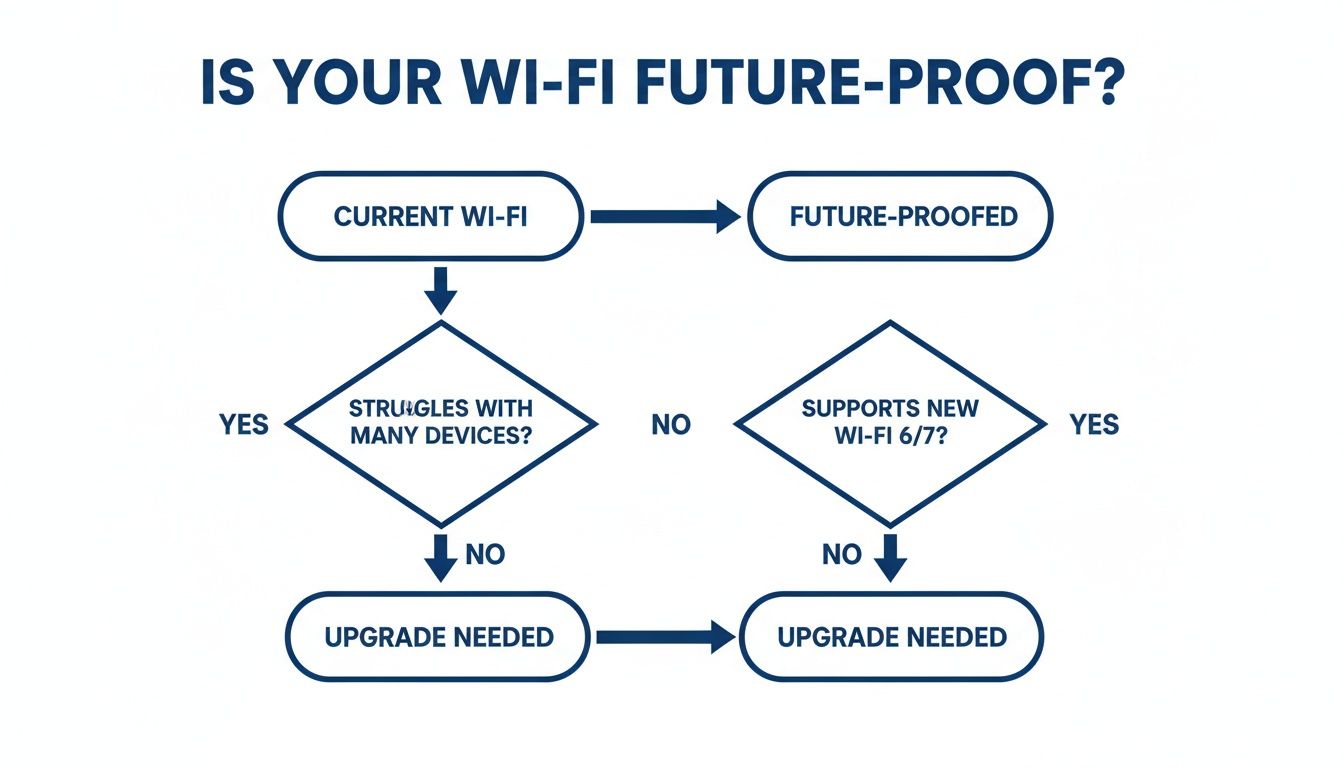
As you can see, if you're struggling with system reliability and integration, it's a strong sign a strategic overhaul is needed.
The Critical Link: Designing Access, Power, and Data Together
A common point of failure is treating core systems as separate projects. You might install a state-of-the-art access control system, but if it loses power or its data connection fails, the building becomes inaccessible and insecure. A successful unmanned building project requires these three pillars to be designed as one interdependent unit from day one.
Access Control: This is more than just a lock. It's how you grant entry, monitor activity, and secure the premises.
Power: Reliable, uninterruptible power is non-negotiable. This includes backup systems (UPS) for all critical components like locks, cameras, and network hardware.
Data: A stable, resilient data connection is the central nervous system. It allows for remote management, real-time alerts, and data logging for security audits.
If one of these fails, the entire system fails. A truly autonomous building has redundant systems designed to work in concert, ensuring operational continuity even if one component has an issue.
Real-World Reasons for Choosing Battery-less NFC Locks
One of the biggest maintenance headaches in unmanned properties is managing battery-powered locks. Dead batteries can lock out legitimate users, require costly emergency call-outs, and create a significant operational burden. This is where battery-less, NFC (Near Field Communication) proximity locks offer a game-changing advantage.
These locks are powered by the user's smartphone when they tap it to unlock the door. The NFC chip in the phone provides the tiny burst of energy needed to operate the lock mechanism.
This simple but brilliant design eliminates the single most common point of failure in smart lock systems.
Zero Maintenance: No more quarterly battery checks or emergency replacements. This drastically reduces operational overhead.
Ultimate Reliability: The lock will always work as long as the user has their authorised device. No more being locked out by a dead battery.
Enhanced Security: Access credentials can be issued and revoked remotely in real-time, providing granular control without ever needing to visit the site.
For any organisation planning an unmanned facility, battery-less NFC locks provide a dedicated, ultra-reliable access solution. They ensure flawless operation, without the constant worry and expense of battery management. To get even more out of it, check out our guide on [finding the best Wi-Fi channels](https://www.constructive-it.co.uk/post/finding the-best-wifi-channels-for-5ghz-network-performance) to optimise the data network supporting your system.
The Role of CCTV in a Secure, Autonomous System
In an unmanned building, CCTV is not just for recording incidents—it's your eyes on the ground, 24/7. Modern IP cameras, integrated with the access control system, provide real-time verification and a powerful deterrent.
When a user unlocks a door, the system can automatically trigger the nearest camera to record a short clip, linking the access event to video evidence. This creates a robust audit trail and allows for immediate remote verification if an alert is triggered.
This integrated approach is squarely aimed at future-proofing building security. It is the best choice for any organisation where site security is simply not an option.
Data Centres: Monitor access to sensitive server racks and ensure only authorised personnel are present.
Self-Storage Facilities: Provide tenants with peace of mind while protecting the entire facility from unauthorised entry.
Remote Utility Substations: Secure critical infrastructure and monitor for environmental issues or tampering in real-time.
A comparison of siloed vs. integrated systems shows the clear advantage of a unified approach.
Practical Comparison of Building Management Approaches
Feature | Siloed Systems | Integrated (Autonomous) System |
|---|---|---|
Primary Benefit | Simple to install individual components | Guarantees Reliability & Efficiency |
Key Technology | Separate systems for locks, CCTV, power | Unified Platform - controls access, power, and data together |
Ideal Environment | Small, single-use properties with on-site staff | Data centres, self-storage, unmanned commercial units |
Best For | Basic security needs | Future-proofing mission-critical operations where failure is not an option |
Ultimately, choosing an integrated approach is a strategic decision. It’s for creating a truly autonomous, resilient, and efficient building that can operate securely without constant human oversight.
Key Selection Criteria For Your Autonomous System
Picking the right technology goes way beyond just grabbing the latest smart lock off the shelf. To build a system that’s secure, reliable, and doesn't give you constant headaches, you need to look at a few practical, real-world factors. Getting these details right from the start is the difference between a seamless operation and a costly mistake.
A proper assessment always starts with your specific environment. Think about the number of users, the types of access required, and the physical layout of your space. This will give you a clear picture of what you actually need.
Management Models: Cloud Vs On-Premises
One of the first big decisions you'll face is how you want to manage your autonomous system. Whether you go for a cloud-managed platform or an on-premises server has huge implications for your team's workload, your ability to scale, and your overall costs.
Cloud-Managed Systems are all controlled through a web-based dashboard, which is brilliant for centralising the management of multiple sites from a single screen. This model is a perfect fit for businesses without a big on-site IT team or for those with properties spread across different locations. It makes granting access, monitoring alerts, and updating firmware much simpler.
On-Premises Controllers, on the other hand, mean you have a physical or virtual server running inside your own network. This route gives you absolute control over your data, which is often a non-negotiable for organisations with strict data sovereignty rules or compliance needs. It demands more hands-on management, but you avoid recurring subscription fees.
The decision often comes down to your operational style and resources. Cloud management gives you simplicity and remote access, while on-premises offers granular control and data privacy that might be required by your internal security policies.
Essential Security Features
In any unmanned property, security is not up for debate. Modern access and surveillance systems are the front line of defence, so they must come equipped with robust features to shield your property and data from threats.
When you're choosing your next system, make sure you prioritise platforms that offer advanced security protocols. These features are a crucial part of building out comprehensive cyber security services for your business.
Look for these critical security capabilities:
End-to-End Encryption: This is the current security standard. It ensures that all data, from access credentials to video feeds, is protected from interception. Any new business-grade system should support strong encryption as a bare minimum.
Audit Trails & Reporting: The system must log every single event—every door unlock, every motion alert, every system change. This detailed logging is vital for security investigations and compliance.
Two-Factor Authentication (2FA): For administrative access to the management platform, 2FA adds a critical layer of security, preventing unauthorised users from gaining control even if they steal a password.
For more complex layouts, you might find our guide on how mesh Wi-Fi works helpful for extending reliable data coverage across large or tricky spaces.
Power & Electrical Installation Considerations
A reliable power supply is the lifeblood of an unmanned building. This requires professional commercial electrical installation and certification. A single network cable can often provide both data and power to devices like cameras and card readers using Power over Ethernet (PoE), simplifying installation.
But you must ensure your network switches and power infrastructure can handle the load, with adequate backup.
Uninterruptible Power Supply (UPS): All critical systems—controllers, network switches, cameras, and electronic locks—must be connected to a UPS to keep them running during a power cut.
Certified Installation: All electrical work must be carried out by certified professionals to meet UK safety standards and ensure reliability. This isn't a place to cut corners.
Power Budgeting: High-performance cameras and advanced access controllers draw significant power. You must calculate the total power budget to ensure your PoE switches and UPS systems can cope.
If you don't match the system's power requirements with the infrastructure's output, you’ll either get poor performance or a complete system failure when you can least afford it.
How To Plan Your Autonomous Building Deployment
Investing in top-tier autonomous technology is only half the job. A truly successful system is built on meticulous planning, not just powerful hardware. A haphazard deployment is a recipe for security gaps, system failures, and performance that falls miles short of what your new tech can actually deliver. A strategic plan ensures every pound you invest translates into a reliable, high-performance automated property.
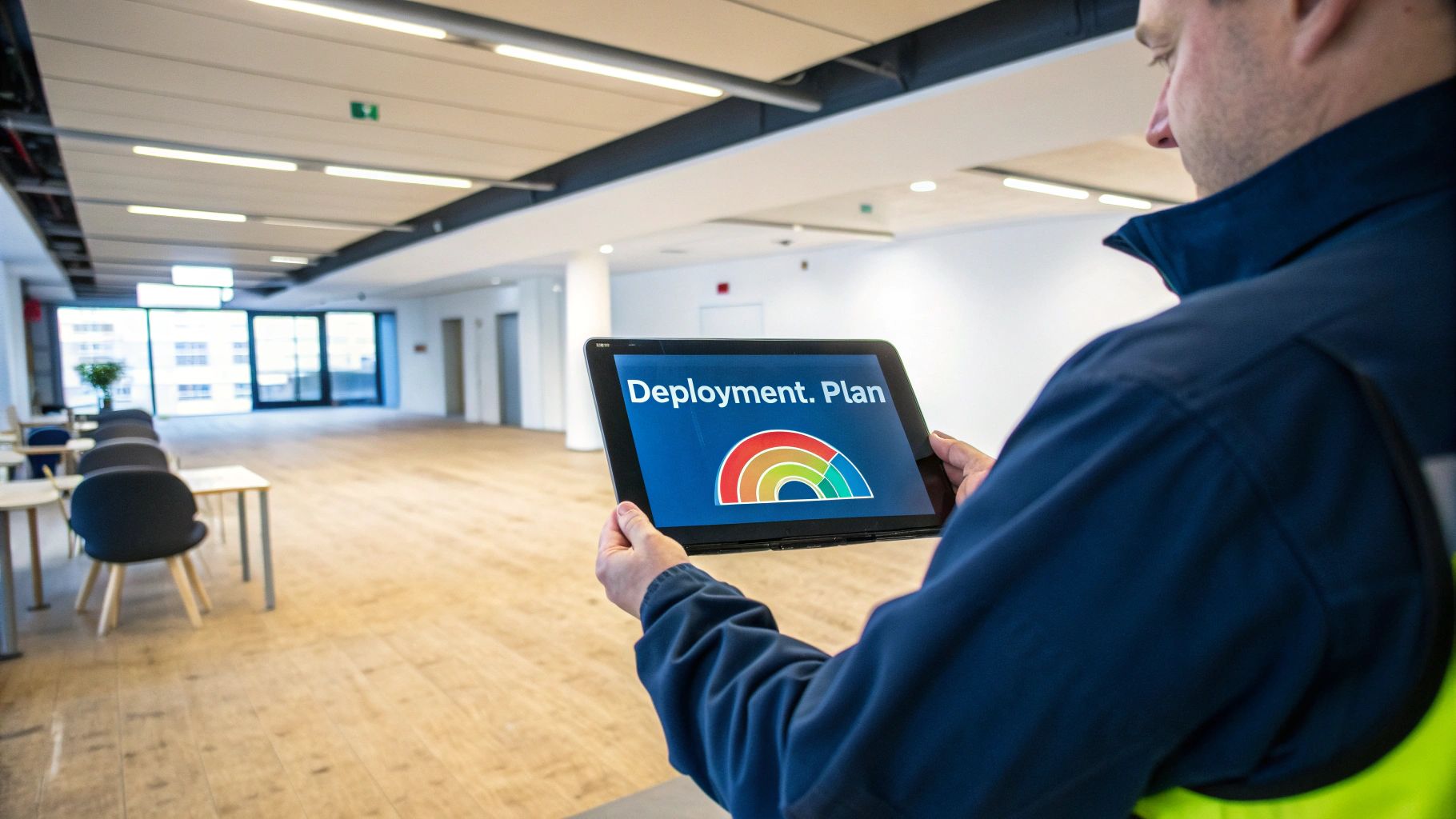
This process kicks off long before you install anything. It demands a detailed understanding of your physical space, your operational needs, and the security risks involved. This blueprint approach turns a potentially chaotic installation into a controlled, predictable project.
Start With A Professional Site Survey
You wouldn't build a house without architectural drawings, and you shouldn't deploy an autonomous building system without a professional site survey. This is the single most critical step to guarantee optimal performance and eliminate the guesswork. A survey involves mapping out the physical environment to plan for security, power, and data infrastructure.
This process reveals potential challenges. Things like thick concrete walls can block wireless data signals, while the physical layout determines the ideal placement for cameras to eliminate blind spots.
A professional survey produces a detailed plan showing the optimal locations for every camera, sensor, and access point. This ensures seamless coverage and functionality, preventing costly rework later.
Without this data, you're essentially guessing where to place your hardware. That often results in security gaps or buying too many components (wasting money). You can learn more about the value of a site survey in our detailed guide.
Calculating Your System and Bandwidth Needs
Once you know where your components should go, you need to figure out how much performance they need to deliver. This is capacity planning. You need to consider what the system will actually be doing day-to-day.
A simple unmanned storage unit has vastly different data needs than a co-working space that requires real-time high-definition video monitoring and frequent access changes for dozens of users.
To plan your capacity properly, you need to assess:
Concurrent Users: How many people might need access at peak times?
Data Throughput: How much bandwidth will your CCTV system require, especially if you're streaming high-definition video to the cloud?
System Integration: Identify all the systems that need to communicate, such as access control, CCTV, and alarm systems, to ensure the network can handle the load.
By building a clear picture of your usage patterns, you can select a system and design a network that can handle the load without creating bottlenecks.
The Critical Role Of Structured Cabling and Power
Your powerful new autonomous systems are completely at the mercy of the wired network and power infrastructure they connect to. The structured cabling is the central nervous system of your deployment, and cutting corners here will cripple performance.
Each IP camera and access reader requires a high-quality, certified data cable (like Cat6a) to carry both data and power via Power over Ethernet (PoE). Dodgy cabling can lead to data packet loss and intermittent connectivity issues that are often wrongly blamed on the devices themselves.
Beyond that, you must design your network with an adequate PoE and power backup budget. High-definition cameras and smart controllers draw significant power. Your network switches and UPS systems must be able to supply enough wattage to every single device, or you risk them failing entirely during a power outage. A properly engineered and certified installation is the non-negotiable foundation for a reliable, secure autonomous building.
Navigating Operational Costs, Licensing, and Support
The price tag on your new autonomous building system is really just the beginning of the story. To get a true picture of the investment, you need to think about the Total Cost of Ownership (TCO). This means looking beyond the initial hardware purchase to the ongoing operational costs, including maintenance and operational considerations, that will pop up over the system's lifespan.
Factoring in these recurring expenses from day one is the only way to avoid nasty surprises down the line. It's what keeps your property a valuable asset rather than a growing financial headache. Getting a handle on your ongoing spend is a core part of good financial management, and exploring some practical IT cost optimization strategies can make a huge difference. This kind of foresight separates a sustainable, high-performing system from one that constantly causes problems.
Understanding Vendor Licensing Models
Every manufacturer plays the licensing game differently, and it’s absolutely vital to know the rules before you buy in. Some vendors offer perpetual licences, where the core features work forever. Others have moved to a subscription model, which means you'll be paying annually to keep your management tools fully functional.
A huge pitfall to watch out for is the "licence cliff." This is what happens when a subscription lapses and your systems either stop working or lose critical management features. Before you commit to any vendor, get a straight answer: What happens when the licence expires? Do your cameras stop recording? Does your access control system lock down?
Scrutinise what the licence actually includes. Is it just for cloud management, or does it also bundle in advanced security features, analytics, and technical support? Getting clarity on these details prevents surprise costs later.
The Importance of Warranties and Support Contracts
Even the most dependable hardware can fail. A solid manufacturer warranty and a clear Service Level Agreement (SLA) are your safety nets. A standard warranty might offer a next-business-day replacement, but what happens if the main access controller for your facility fails?
This is where enhanced support contracts really prove their worth. Look for SLAs that spell out specific response and resolution times. For a mission-critical unmanned building, a four-hour on-site response could be the difference between a minor hiccup and a major operational disaster.
When you’re looking at support contracts, dig into the details:
Access to Expertise: Does the contract give you a direct line to skilled engineers, or are you going to be stuck in a frustrating support queue?
Software and Firmware Updates: Proper support should always include access to all firmware updates. These contain vital security patches and performance fixes.
Coverage Hours: Is support available 24/7, or is it limited to business hours? Your unmanned facility runs around the clock, and your support should too.
Planning for Maintenance and Security Patching
An autonomous system is never "set and forget." To keep it secure, stable, and running at its best, it needs regular maintenance. A massive part of this is a disciplined approach to firmware updates. Vendors constantly release patches to fix security holes and squash bugs.
Putting off these updates can leave your network and property wide open to known security exploits. You need a clear policy for testing and rolling out firmware updates in a controlled way. Proactive maintenance is how you protect your investment and ensure your building remains a secure, reliable asset.
Your Unmanned Building Questions, Answered
Here are some straight answers to the questions we hear most often from UK businesses when they're planning a new autonomous property.
Where Are These Systems Commonly Used?
Unmanned building management is incredibly versatile. We see it deployed most often in environments where 24/7 access is needed without the cost of on-site staff. Common examples include self-storage facilities, where tenants need access at all hours; data centres, which require stringent, audited security; co-working spaces offering flexible access; and remote utility or telecoms enclosures that need to be secured and monitored from afar.
Can I Just Mix and Match Components From Different Brands?
Technically, you can, but it’s a terrible idea for any serious autonomous system. You’ll end up juggling different dashboards and trying to make sense of multiple systems that don't talk to each other. It’s a management nightmare waiting to happen.
More importantly, the deep integration needed for true automation—like having a door access event automatically trigger a specific camera—simply won't work properly. You’ll also find it nearly impossible to enforce the same security rules across the board. For a reliable and secure system that just works, sticking to a single, unified platform is the only way to go.
What's the Difference Between a Smart Lock and a Full Access Control System?
It’s easy to get these two mixed up. A consumer smart lock is a standalone device designed for a single door. An access control system is a comprehensive solution designed to manage every entry point in a building from a central platform. It provides detailed audit trails, user schedules, and integrates with other security systems like CCTV and alarms.
An access control system does one thing and does it well: it gives you total command over who can go where, and when, across your entire property. In a typical business setup, a central controller communicates with readers and locks at each door, all managed through a single software interface.
Think of a smart lock as a single security guard, while a full access control system is the entire security operations centre for your building.
How Much Does Cabling Really Affect My System's Reliability?
It affects it enormously. Your structured cabling and electrical wiring are the absolute foundation of your autonomous systems. Every IP camera, access reader, and network device needs high-quality, certified cabling (like Cat6a) to carry both network traffic and its power (Power over Ethernet, or PoE).
Using old, cheap, or uncertified cabling is a classic mistake. It creates bottlenecks, might not deliver enough power for high-performance devices, and leads to flaky connections that are often blamed on the hardware itself. A professional, certified cabling and electrical installation is non-negotiable if you want the reliability your unmanned building depends on.
Ready to build an autonomous property that just works? The expert team at Constructive-IT handles everything from professional site surveys and structured cabling to the final system deployment and optimisation, ensuring your project is delivered on time and on budget. Get in touch today to plan your network upgrade.
Comments